

Olá! I am Paula Borges from Rio de Janeiro, Brazil, and I was one of the 10 essay winners from the “Moving Beyond GDP” Essay Competition launched by the SDG Lab in partnership with Rethinking Economics. My winning essay secured me a fully-funded trip to Switzerland to attend and speak at the conference “What Counts in the Future? A Youth Perspective on Measuring What We Value” held on April 17th, organized by UNCTAD and Rethinking Economics. While writing about the limitations of GDP as a well-being measure, I had no idea I would actually have the chance to share those points with 9 other peers and multiple specialists at a conference, nor did I expect to come back to Brazil so inspired by this experience.
The focus of the meeting mirrored the theme of the “Moving Beyond GDP” Essay Competition. The aim was not only to reaffirm the limitations of the current GDP-centric framework in measuring well-being and success and the need for cooperation and commitment in developing a more inclusive framework that can integrate GDP. But the aim was also to bridge the gap between international organizations, their goals, and the younger generation, by hearing their perspectives on what things should also be valued in this new era.
April 17th started really early for us. Most had arrived the day before, but others just got to Geneva that same morning. After getting together for the first time and having the chance to talk with each other in person, we met Tatiana Valovaya, Director-General at the United Nations Office at Geneva. In our meeting, Valovaya talked about her life and career and also shared her perspectives on future metrics and other topics that she later addressed in her speech that marked the beginning of the conference.

The conference was moderated by Trine Schmidt, IISD Strategic Advisor with the SDG Lab. In her opening comments, she expressed the significance of extending our perspective beyond 2030 by reevaluating economic systems and indicators in the years ahead.
That was underscored by Pedro Manuel Marino, the UNCTAD representative. Marino painted a concerning picture: 2024 is the third consecutive year that GDP growth is below pre-pandemic levels, and only 15% of Sustainable Development Goals (SDGs) are on track globally. He further highlighted the widening inequalities both between nations and within them. Developing nations struggle with heavy debt burdens that hinder growth, while the benefits of technology are unevenly distributed. Climate change exemplifies this disparity, disproportionately impacting those who contributed least to the problem. Marino’s message was clear: the current economic model is unsustainable and incompatible with a greener, more equitable future calling for the need of a new framework of success.
Our youth voices
Since the participation of young people in this new framework is essential, the essay winners had the opportunity to present their perspectives on the values that should be embedded in this new framework.
First, Juliana Makonise from Zimbabwe talked about her concept of a GDP-e mindset, which prioritizes growth with a human-centered approach that considers the environment. In contrast, Kaydence Drayak from the Orkney Islands in Scotland suggested the possibility of combining economic development with human rights principles to address wellbeing. Following these presentations, I addressed the issue of environmental degradation and its potential to erase entire cultures.
Rose Holm from Denmark then shifted the focus to “Wellbeing Economics.” She argued that change is necessary not only in our economic system but also in our cultural definition of a good life. She pointed out that creating new metrics is not enough if our society remains highly individualistic and consumption-driven. Finally, Aymen Ahmad from Pakistan tackled issues like urban inequality, environmental damage, and the neglect of the underprivileged. She argued that the new framework should also consider the emotional, mental, and spiritual wellbeing of all beings.
The second half of the conference involved breakout room discussions. Here, I’d like to focus on the issue raised by Gustav Krigslund-Hansen from Denmark and Julius Coenradie from the Netherlands: incentivizing responsible behavior regarding global commons and externalities. They proposed creating laws and rules, including the possibility of rights for nature mirroring human rights, to discourage countries from externalizing costs like deforestation and air pollution.
Intergenerational discussion and reflection
The discussions that followed were a very interesting intergenerational set of reflections, starting with the final perspectives from state and institutional representatives. Initiating the conversation was Muyumbwa Kameda, representing Zambia at the UN Office in Geneva on behalf of Eunice M. Tembo Luambia that cited Zambia’s recent debt restructuring with the IMF and World Bank as a successful example of initiatives discussed that could lead to real-world benefits.
Next, Jean-Luc Bernasconi, head of the Swiss Agency for Development & Cooperation, cautioned that change requires institutional transformation and capacity building, especially if we want to make this a fair process for all countries. Till Leopold, representing the World Economic Forum, expressed the importance of the private sector as a bridge between individuals and global institutions. Cyril Yemofio, the first secretary of the Permanent Swiss Mission to UN Geneva, agreed with most of these points.
Then, it was the turn of the youth to give out their perspectives. For instance, Felix Barbieri, from Germany, expressed concern over the decreasing trust of the younger generation in institutions and the global order due to the failure to make necessary radical changes. He stressed the importance of incentivizing change through political channels, advocating for a revamped economic curriculum, academic discourse, and media presence to promote alternative economic measures.
Laurence Jones-Williams, Director of Rethinking Economics International, then emphasized the significance of youth engagement in political change, including the “Moving Beyond GDP” movement. He underscored the importance of providing platforms for young voices and urged for concerted efforts to persuade politicians and statisticians to adopt alternative metrics. Jones-Williams advocated for a popular movement approach, emphasizing the need for collective action to pressure those in power, particularly by empowering students and young people through meetings and activism.
Özge Aydogan, Director of the SDG Lab, delivered closing comments, noting the emergence of the “Moving Beyond GDP” trend and acknowledging the enduring popularity of GDP as a metric and the importance of an intergenerational debate. She emphasized the need to learn from GDP’s positive aspects while developing new measures, prompting reflection on what lessons can be learned from GDP.
My final thoughts
GDP emerged as a wartime tool to assess economic strength and incentivize growth. Today, facing an environmental crisis and rising inequality, we need to move beyond it. A new economic framework can finally illuminate the downsides of unsustainable growth, including environmental damage and the critical role of unpaid work (often done by women). This would amplify the voices of the underprivileged, making their needs more visible to policymakers.
We must redefine economics itself. Despite its profound impact on daily lives, economics feels inaccessible to many. It isn’t because people don’t care about environmental issues or inequality – since they experience these firsthand. Rather, the subject itself is often daunting… We must create an environment where people feel connected to economics and the decisions it shapes. This requires not only change the framework but also transforming economics education.
However, as Rose Holm suggests, and I agree, changing metrics isn’t enough. We must redefine economics itself. Despite its profound impact on daily lives, economics feels inaccessible to many. This isn’t because people don’t care about environmental issues or inequality – since they experience these firsthand. Rather, the subject itself is often daunting. How can they connect with economics if for example, when they turn on the TV they see a barrage of unexplained statistics, numbers, and unfamiliar concepts labeled as “economics”?
We must create an environment where people feel connected to economics and the decisions it shapes. This requires not only changing the framework but also transforming economic education. University economics curriculums cannot remain as narrow as a GDP-focused metric of success if we want people to contribute to change. That’s why initiatives like Rethinking Economics are key to this movement. Any new approaches to complement GDP require out-of-the-box thinking and creative solutions, qualities that are very present in the students involved with RE, so I could not be more excited to hear their opinions regarding this conference and topic.

Paula Borges
Essay winner, Moving Beyond GDP Essay Competition
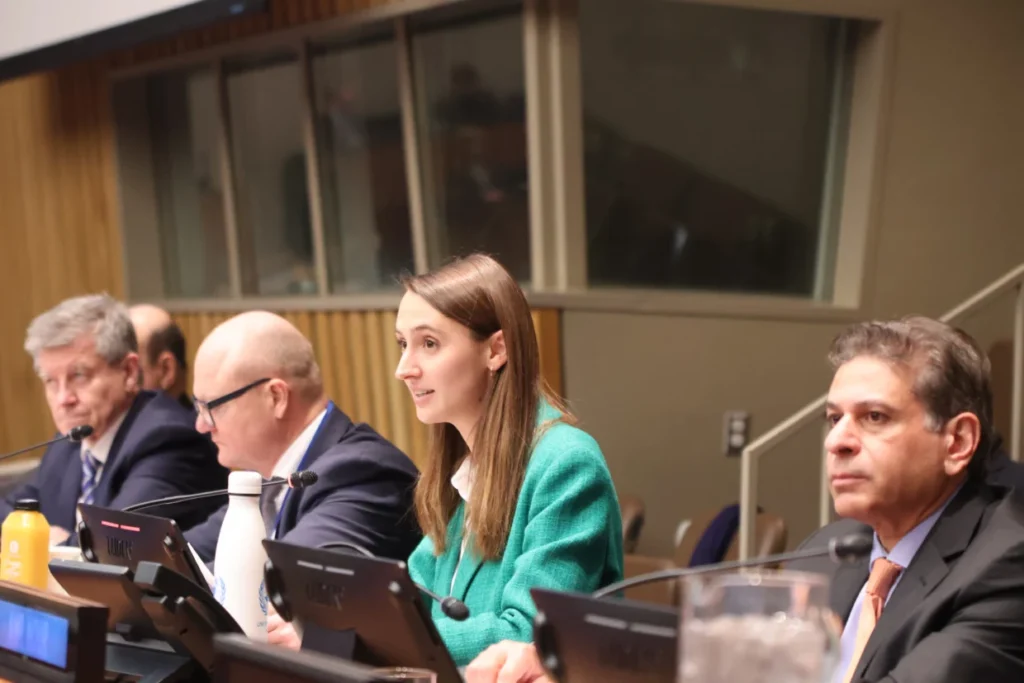
Intergenerational equity takes centre stage at the UN’s “Beyond GDP: Rethinking Progress in a Changing World”
With the Secretary-General’s independent High-Level Expert Group on Beyond GDP preparing its recommendations, the 2026 High-Level Forum on Official Statistics became a space not only to refine indicators but also to reflect on who defines progress and for whom. From the outset, the Youth Moving Beyond GDP initiative was recognized as a shaping force in the process.
Friday 20 March 2026

Is the UN’s COP Process the Biggest Greenwash Humanity Has Faced?
A decade after the adoption of The Paris Agreement, we saw 2024 as the hottest year on record. Merja Turpeinen argues our ecosystem is being put under unsustainable pressure.
Friday 13 March 2026

The Youth Network on Beyond GDP’s Policy Recommendations
As part of the "Youth Moving Beyond GDP" initiative, we are pleased to present the Youth Network on Beyond GDP’s recommendations, co-developed through a global, youth-led process to redefine how progress is measured. These recommendations place people and planet, across current and future generations, at the heart of economic systems and reflect the insights, expertise, and lived experiences of young people worldwide.
Monday 17 November 2025