


A decade after the adoption of The Paris Agreement, we saw 2024 as the hottest year on record. Over-consumption of countries in the Global North and the ecological pressure it puts on our ecosystem has not been dealt with, because it challenges the GDP growth paradigm. The pressure to consume drives resource extraction, pollution and waste, which contributes to the climate and extinction crises. The COP (Conference of the Parties) process allows nations in the Global North to avoid accountability while pressuring poorer nations. Hijacked by the fossil states, these mechanisms have never been sufficient to drive real change. The rule-based frameworks such as the Paris Agreement are weak, because they lack enforcement mechanisms and sanctions for failing to meet agreed targets.
We’re on the brink of an ecological collapse, and we’ve surpassed the 1.5-degree threshold. The current policies are far from reaching the agreed targets and have us on track for a catastrophic scenario of3°C by the end of the century.Others warn of 4–5-degree warming.
Disappointment and frustration after the 30th COP were visible all over the media at the end of 2025. The weak results of the conference are no surprise, as the root cause of the ecological breakdown remains untouched: the economic system built on endless growth. Earlier this year, UN secretary-general António Guterres warned in The Guardian, that the world must move beyond GDP to prevent planetary disaster.
While the COP conferences may be symbolically powerful, they fall short in delivering a just systemic change needed to combat climate and ecological breakdown efficiently. To avoid constraining economic growth, the COPs don’t address the responsibility of Global North countries for structural overconsumption, even though overconsumption is a key driver of ecological collapse. If we continue prioritizing economic growth above all else, all efforts to address the crisis risk becoming the biggest global greenwash humanity has faced. With devastating consequences.

Source: Climate Insider
Attempts to achieve absolute decoupling of economic growth from environmental pressure in high-income countries are nowhere near sufficient for Paris-compliant emission reductions, indicating that green growth is neither occurring nor realistically achievable. In a recent article in Time, UN Special Rapporteur Olivier De Schutter discusses the social aspects of economic growth, which rely on the exploitation of cheap labour and draining of resources in the Global South.
The economic system built on endless growth no longer improves wellbeing in the Global North, in fact quite the opposite.
My home country Finland is one of the highest consuming nations in the world: Finland’s economy uses natural resources the most in Europe per capita. Our consumption-driven lifestyles and advertising of products we don’t need are environmentally destructive and make us endlessly desire for more. Yet we’ll never be, or are we allowed to be, content with what we have.
We need to decouple the idea of wellbeing from economic growth.
Degrowth, for instance, offers a viable and desirable solution to the global socio-ecological crises. Degrowth refers to a planned and democratic reduction of non-essential material production and consumption in Global North countries to decarbonize and to cut ecological overshoot. It emphasizes separating essential needs from wants. Degrowth stresses a sense of urgency and is the only tradition from the Global North that explicitly acknowledges the ecologically unsustainable lifestyles of many countries in the Global North and how that contributes to global ecological destruction.
The appropriate degrowth policy mix varies depending on the country. In Finland, this could involve sufficiency-oriented policies such as restricting environmentally harmful advertising, increasing taxes on environmentally damaging products, reintroducing wealth taxes and setting consumption quotas. Rethinking work through basic income and shorter working hours is also essential.
Although the term degrowth is subject to debate, a recent study done in the US & the UK found that the full degrowth proposal enjoys broad public support when presented as a coherent policy package. The full proposal used in the study summarizes key aspects of degrowth, including reducing harmful and non‑essential production and consumption in high‑income countries to meet ecological goals; improving wellbeing through universal public services, affordable housing, decent jobs, and living wages; democratising control over the economy; enabling countries in the Global South to pursue human development free from exploitative global relations; and pursuing technological efficiency alongside principles of sufficiency rather than endless growth.
Degrowth is an attractive pathway to living within planetary limits while advancing social justice, equity, and human flourishing.
We must demand real, fair action from our decision makers, not just plaster solutions that leave the status quo untouched while driving us towards ecological collapse.
It’s about time we question the foundations of the systems, values and paradigms that govern our lives.
Can we please end global green-washing and Make Earth Great Again?
Photo by Jonathan Ansel Moy de Vitry on Unsplash
Contributors
Merja Turpeinen
Merja is the chair of Rethinking Economics Finland and a post-growth communications entrepreneur with forest Sámi roots. Merja works in the coordination team of The Finnish Expert Panel for Sustainable Development, focusing on sustainable narratives, media relations and planetary policy work. She started her master’s degree

Share this article
Topics
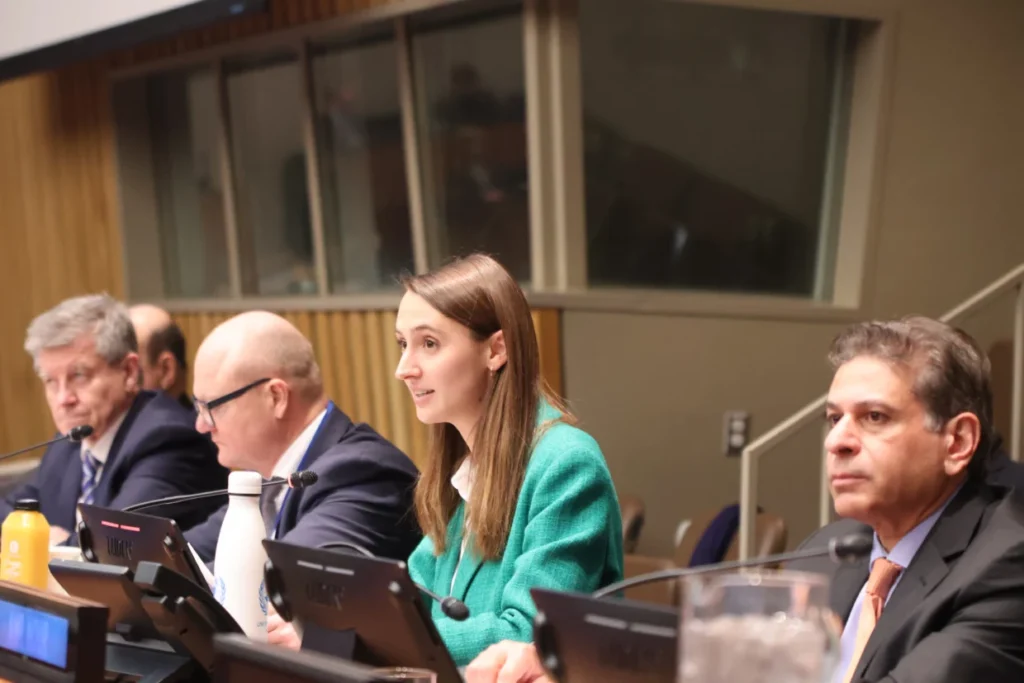
Intergenerational equity takes centre stage at the UN’s “Beyond GDP: Rethinking Progress in a Changing World”
With the Secretary-General’s independent High-Level Expert Group on Beyond GDP preparing its recommendations, the 2026 High-Level Forum on Official Statistics became a space not only to refine indicators but also to reflect on who defines progress and for whom. From the outset, the Youth Moving Beyond GDP initiative was recognized as a shaping force in the process.
Friday 20 March 2026

The Youth Network on Beyond GDP’s Policy Recommendations
As part of the "Youth Moving Beyond GDP" initiative, we are pleased to present the Youth Network on Beyond GDP’s recommendations, co-developed through a global, youth-led process to redefine how progress is measured. These recommendations place people and planet, across current and future generations, at the heart of economic systems and reflect the insights, expertise, and lived experiences of young people worldwide.
Monday 17 November 2025

My experience at “What Counts in the Future? A Youth Perspective on Measuring What We Value”
I was one of the 10 essay winners from the “Moving Beyond GDP” Essay Competition launched by the SDG Lab in partnership with Rethinking Economics. My winning essay secured me a fully-funded trip to Switzerland to attend and speak at the conference “What Counts in the Future? A Youth Perspective on Measuring What We Value” held on April 17th, organized by UNCTAD and Rethinking Economics.
Friday 3 May 2024