


This past academic year I had the pleasure to take over teaching of the Economic Reasoning module, part of the first-year Economics program at Goldsmiths, University of London. This course revolved around some of the most foundational, yet often overlooked, questions in economics: What does economics study? What kind of science is it? How do economists think?
Despite the importance of these questions, they often escape serious scrutiny by economics students – even up to the PhD level (like myself), and perhaps beyond. In this post, I’d like to share a few takeaways from the module and offer some reflections on the state of the economics profession.
What Is Economics?
This might seem like an obvious place to start, but it’s surprisingly slippery. While other disciplines can often be defined by their subject matter — medicine studies health, psychology the mind, astronomy the cosmos — economics is harder to pin down. Even compared to other social sciences, its object of study remains unusually blurry.
Here’s a telling anecdote: My brother once asked his son, my 9-year-old nephew, “Your uncle is an economist — what does economics study?” After thinking for a moment, he replied, “Economics studies society.” “Bravo!” said my brother. “Very good,” I added. It was a great effort for a child his age, but unfortunately, that’s the domain of sociology.
So… back to square one. What does economics actually deal with?
Interestingly, this question doesn’t seem to bother everyone. In fact, many economists would say it was settled long ago. The standard answer? Scarcity.
If you look this up (say, on Wikipedia) you’ll find at least four definitions of economics. The most commonly accepted one is Lionel Robbins’ famous definition: “Economics is the science which studies human behaviour as a relationship between ends and scarce means which have alternative uses.” The problem with this definition is that, as Ha-Joon Chang points out, Robbins’ it tells us more about the discipline’s method than its subject matter. In essence, economics becomes the study of rational choice — of how individuals and societies make decisions under constraints.
On Exchange and Production
So, how do we make sense of economics as a field? A useful starting point comes from Pasinetti who noted that historically, the development of capitalist systems has moved through two broad phases: one focused on trade, the other on production (Pasinetti, 1981).
In the early phase, societies generated income primarily through trade — by optimizing the allocation of already-existing goods and resources. Production was typically specialized: communities produced more of what they were already good at, especially if they could gain from trading it. These “gains from trade” were valuable but usually one-off — a static kind of efficiency.
This is the realm of exchange, and the central problem here is rational allocation: how to best distribute what we already have. It’s an optimisation puzzle, expressible as a mathematical function maximised under the constraint (a given endowment of resources).
To bring this down to earth: think about kids trading football stickers. The stickers you get are random; the goal is to swap strategically to complete your collection. That’s economics, or at least, one side of it.
The dominant view in the era of trade was mercantilism, which saw economic value as coming from the accumulation of money (typically gold or silver) through trade surpluses (Lichtenstein, 2016). Picture fleets of ships moving from port to port, trading spices and silk for bullion, building the wealth of cities like Venice and Seville and later Amsterdam and London. This phase laid the groundwork for the modern banking system.
Then came the Industrial Revolution, and with it, a shift in focus to production. Now, societies weren’t just trading more of the same stuff; they were making entirely new things. Production increased both in quantity and variety.
But unlike exchange, production is dynamic. It involves learning new skills, adopting new technologies, reorganising work, and building new institutions. It requires deep societal transformations and often the heavy involvement of science and technical applications. Lastly, wealth takes time to accumulate, as building a profitable industrial sector is a long-term process. As such, the core challenge in the production paradigm isn’t allocation: it’s learning and innovation.
The analytical foundation of this shift lies in Adam Smith’s concept of the division of labour. In essence, instead of the artisan workshop where one labourer was involved in the entire production process, in Adam Smith’s pin factory each worker works on one task. The division of labour allows for i) improvement of workers’ skills; ii) saving time; and iii) technical progress (Roncaglia, 2017). Thus, the division of labour influences productivity, e.g., the number of pins per worker.
Any increase in productivity must be absorbed by the markets; hence, a free market leads to prosperity by allowing the deepening of the division of labour. Productivity gains lead to accumulation of surpluses which can then be invested into the production process, increasing employment. The accumulation process is virtually infinite; however, its development is rather slow. Hence, compared to trade – which, as we said, is a static concept – production is dynamic.
A production-based economy has important implications for society at large. It requires fundamental changes in society. If we look at Britain during the Industrial Revolution, we can identify several societal changes. For instance, urbanisation, with migration from the countryside to the cities where people often amassed in crowded and polluted slums. The need for new infrastructure like railroads, able to connect regional markets, allowing for the emergence of national and international markets. The rise of the middle class. Political unrest as a result of class conflicts. Social and political innovation such as the welfare state and electoral representation.
A case study: South Korea
A fascinating case study is that of South Korea. The peninsular Asian country is one of the few that managed to economically develop and catch up with the rich economies of the Western world (such as the USA, the Anglo-Saxon countries, Western Europe, and Japan).
Over the span of fifty years, Korea transformed from an agriculture-based economy, where most if the national income came from the primary sector and “petty services” (sectors with limited capital contribution and low productivity), into an advanced industrial and service-driven one, shifting its focus from low-productivity sectors to high-value manufacturing and connected services.
But how did Korea achieve this? Let’s use the example of Hyundai – the carmaker – as illustrated by Chang (2022). The company was part of the Hyundai business group, which started in 1947 as a construction company. With the aim of moving into higher productivity sectors, the Hyundai Motor Company (HMC) was launched in 1967. It took almost a decade for the company to start recording a profit, thanks to the domestic success of the 1975 Pony model. In the meantime, other parts of the business group had to subsidise the loss-making HMC (intra-group cross-subsidisation). Furthermore, the Korean government played an essential role. First, it prevented the penetration of foreign-produced cars, following the logic of “infant industry protection”. Moreover, it directed bank lending toward strategic industries—sectors the government prioritised for development. Additionally, the government imposed a programme of domestication, encouraging the production of locally developed models (which led to the creation of the Pony) and pressuring Korean manufacturers to increase the share of domestically produced inputs.
It is an extraordinary example of how visionary business ownership and management, combined with targeted industrial policy, can produce historic results.
South Korea’s transformation exemplifies the shift from an exchange-based economy to a production-based one, driven by strategic industrial policy, technological learning, and institutional change.
We may not have a definitive answer to what economics is, but we’ve begun to sketch its contours: not just as a science of scarcity.
The author wishes to thank Ivano Cardinale. This article also draws on material he collected while teaching this module at Goldsmiths, University of London.
References
Chang, H.J., 2014. Economics: The User’s Guide: A Pelican Introduction. Penguin UK.
Chang, H.J., 2022. Edible economics: A hungry economist explains the world. Random House.
Lichtenstein, P.M., 2016. Theories of international economics. Routledge.
Pasinetti, L.L., 1981. Structural change and economic growth. Cambridge: Cambridge.
Roncaglia, A., 2017. A brief history of economic thought. Cambridge University Press.
Contributors
Brian Cepparulo
Lecturer in Economics – Goldsmiths, University of London PhD student – University of Greenwich

Share this article
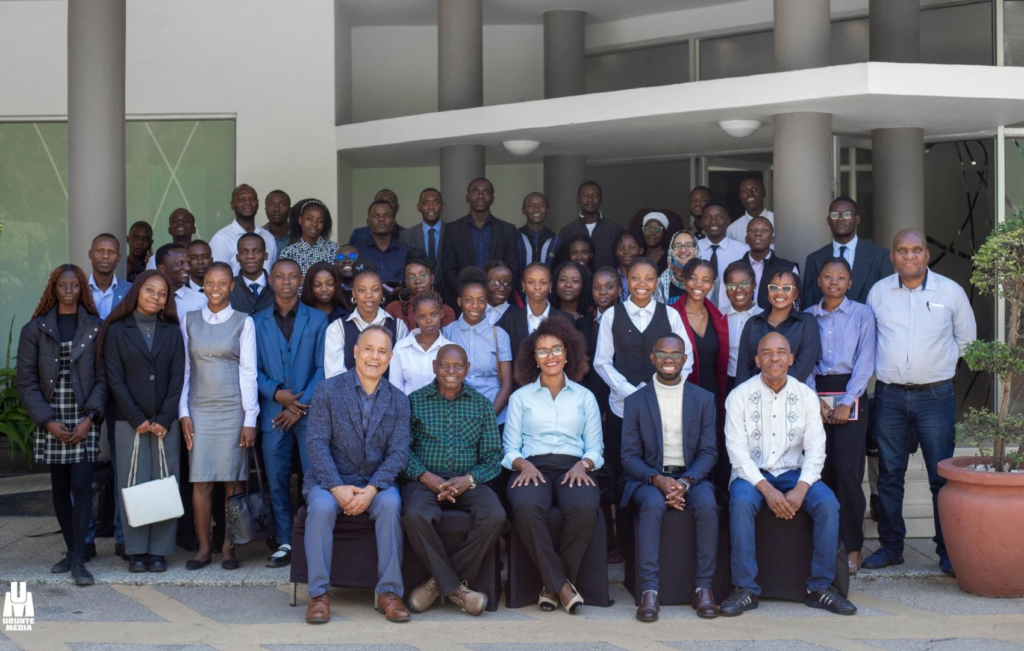
Measuring What Matters: Inclusive and Sustainable Growth Beyond GDP
Participants came from public and private Universities, think-tanks, and research institutions namely Mulungushi University (MU), the Copperbelt University (CBU), Kwame Nkrumah University (NKU), ZCAS University, Information and Communication University (ICU), Cavendish University Zambia (CUZ), the University of Zambia, Kabwe Institute Of Technology (KIT), Amin Centre for Policy Research, and United Nations Zambia Youth.
Wednesday 7 October 2026
Teaching economics with a gimlet eye: PPE at Goldsmiths
Paul Gunn, convenor of the Economics, Politics and Public Policy BA programme at Goldsmiths, University of London, reflects on how the unrest that followed the financial crash helped inspire a new Politics, Philosophy and Economics degree.
Wednesday 7 October 2026
‘Why Should Democracy end at the seminar room door’?: Political Economy Education, Care and Intellectual Promiscuity
What does it take to rethink how we teach economics? John Barry, Professor of Green Political Economy at Queen’s University Belfast, explores what happens when we start by asking students what they want to learn, responding to their needs, and embracing the value of systems […]
Wednesday 7 October 2026