

The Movements for Economic Justice course helps situate students in the political economy they study
We start the class with a journal entry: “What does economic justice mean to you?”.
For ten minutes, we all keep our pen on the page without lifting it, writing everything and anything that comes to mind. The journal doesn’t need to be well written or academic. Nor does it even need to really make sense. The point is to have a time-constrained opportunity to sit with this question, to reflect, to consider what this concept actually means to each of us.
This is the foundation of one of John Jay’s newest required Economic’s courses, Movements for Economic Justice, which I had the joy of teaching during its first semester. The course, which in the United States was classified as a 200-general education course for new transfer students, was proposed with the intention to “emphasise the need for economic community building as a vital tool of social change” and expose students to collaboration, community engagement, and knowledge production.
As one of the leading heterodox programs in the United States with a primarily working-class student body, I have found that while my students largely identify as politically and socially progressive, they often justify economic policies aligned with more market-oriented thinking, particularly when discussing inequality and welfare programs, which they describe as “handouts” for those seen as “lazy” or undeserving. I have found that by bringing film and speculative fiction into my classroom as tools to reimagine what “the economy” means, more creative and critical discussions on what the economy actually means in their lives and what it could look like has occurred. In other words, finding openings for critical consciousness and empathy.
Over the course of four months, I introduce students to movements for economic justice primarily through collaborative and multi-disciplinary assignments. While I lecture and assign readings and films on essential movements in history-the movement for an eight-hour workday and the 1963 March on Washington for Jobs and Freedom, for instance-much of the course is grounded in discovering movements for justice in our own lives, for as Freire aptly puts, “Reading the world always precedes reading the word.”
Students are asked to do this in a multitude of ways. First, they explore movements for justice within our university-such as clubs, unions, and contract negotiations-through an assignment called the “Community Engagement Survey.”
The second main assignment is a Collective Group Project with classmates exploring a historical movement for economic justice and connecting it to a contemporary movement. In this way, they are being asked to understand the intricacies of how movements for economic justice are all connected. Who are the actors in each case study? What conditions have caused this rupture? What economic structures were responsible for these conditions? Are they the same? Different?
At the end of the semester, students must write or create a final project, “My life and justice”, which explores economic injustice in their own lives. What has caused this injustice? What are the economic policies and reasonings for why this injustice exists? Are there any movements fighting against this injustice? Who are they? While the first part of the assignment must show deep reading and research, the second part, which asks students to reflect, can be done as an essay, a blog, a poem, a song, or artwork.
These distinct assignments represent the core goals of the class, and core goals of the decolonising agenda: to provide students with a historical and social analysis of economics, to prioritise learning as a transformative process through collaboration, personal reflection, and diverse learning materials, to de-center the eurocentric mainstream, to expose students to critiques of knowledge production, and to generate empathy and critical consciousness.
By positioning the course as a collaborative space entrenched in reflection, each class section was unique, inspired by the diverse and distinctive stories that each student brought to the classroom. Rather than being forced to learn about history and economic policy that felt disconnected from reality, students were asked to look from within and follow their passion, exploring historical and contemporary movements for justice that resonated with their own lives. The result was a class filled with debate, deep reflection, and respect for one another. As Dutt et al argue in Decolonising Economics: An Introduction, “To create economically literate, critical, socially conscious, and engaged citizens of the world, it is crucial for both lecturers and students to analyse where they fit into the larger political economy, and how they benefit from or are harmed by the structures they study and critique” (2025, p. 194-195).
The incorporation of art, film, poetry, and music in the course, both in the classroom and through assignment, provided another form of context and relevance. Amber Murrey and Patricia Daley explore this idea in Disobedient Pedagogies: Decolonising Development Studies, suggesting that “The theorisation of power, the critique of coloniality, heteropatriarchy and racism, and the fostering of other ways of being, knowing, and acting has long been best championed amongst activists, songwriters, musicians, poets, writers, visual artists and storytellers, who, in whatever medium they use, provide incisive analysis of the conditions of life in the Global South and articulate visions of alternative lifeworlds” (2023, p. 26). While many of my students were engaged, passionate citizens, they often expressed confusion and apprehension about economics as a discipline. By connecting economic policy to the injustices that surrounded them, and to the injustices that are reflected in the songs and films that they consumed and loved, that disconnect started to evaporate. Rather than repressing economic knowledge, we widened the playing field: what can our art and media tell us about the world we are living in? This is what decolonising and democratising knowledge production looks like: widening what expertise can look like, connecting the world to our own lived experiences, and taking that understanding to express empathy and solidarity with others.
At the end of the semester, we return to that first journal assignment. How do we feel about responses? Do we still agree with what we wrote? Do we disagree? Maybe nothing has changed. Hopefully, however, we have a little more empathy and a stronger sense of community. Hopefully, we have more tools in our arsenal to understand what’s going on around us, and ways to be engaged. Hopefully, we understand that nothing has ever happened for the good of justice without people of all walks of life coming together, and seizing it.
References
Dutt, A.K., Alves, C., Kesar, S. and Kvangraven, I.H. (2025) Decolonizing Economics: An Introduction. Oxford: Oxford University Press.
Murrey, A.L. and Daley, P. (2024) Learning Disobedience: Decolonizing Development Studies. Oxford: Oxford University Press.
Contributors
Sasha High
Adjunct Lecturer – John Jay College of Criminal Justice.

Share this article
Topics
Measuring What Matters: Inclusive and Sustainable Growth Beyond GDP
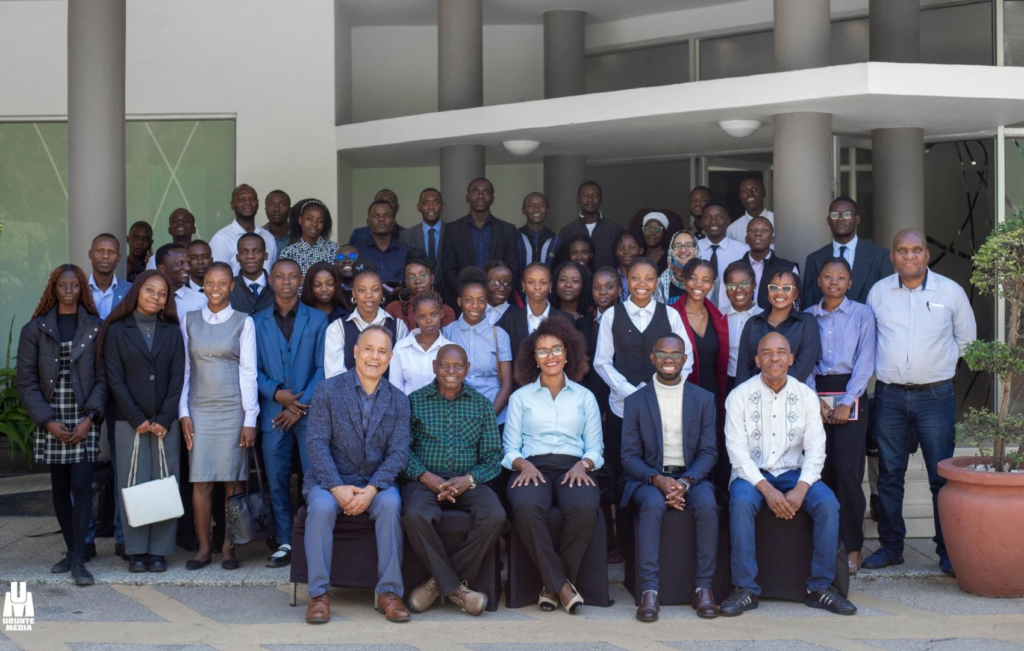
Participants came from public and private Universities, think-tanks, and research institutions namely Mulungushi University (MU), the Copperbelt University (CBU), Kwame Nkrumah University (NKU), ZCAS University, Information and Communication University (ICU), Cavendish University Zambia (CUZ), the University of Zambia, Kabwe Institute Of Technology (KIT), Amin Centre for Policy Research, and United Nations Zambia Youth.
Wednesday 7 October 2026
Teaching economics with a gimlet eye: PPE at Goldsmiths
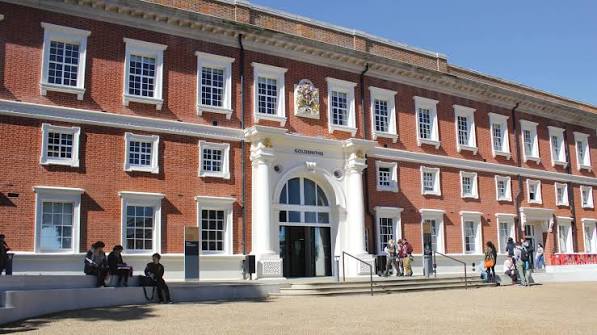
Paul Gunn, convenor of the Economics, Politics and Public Policy BA programme at Goldsmiths, University of London, reflects on how the unrest that followed the financial crash helped inspire a new Politics, Philosophy and Economics degree.
Wednesday 7 October 2026
‘Why Should Democracy end at the seminar room door’?: Political Economy Education, Care and Intellectual Promiscuity
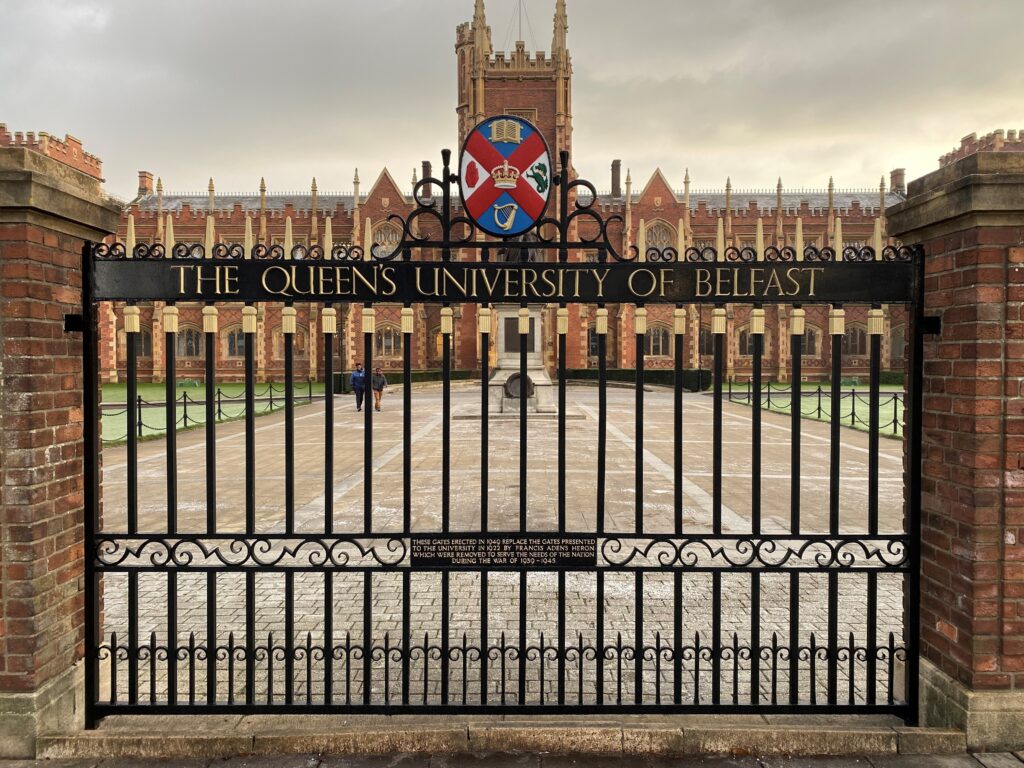
What does it take to rethink how we teach economics? John Barry, Professor of Green Political Economy at Queen’s University Belfast, explores what happens when we start by asking students what they want to learn, responding to their needs, and embracing the value of systems […]
Wednesday 7 October 2026