

The problem of the value neutrality of our economic relationships
Values without markets and markets without values are weakening democracy: a market for values would strengthen it. At a time when leaders such as the president of Finland Alexander Stubb and the Canadian prime minister Mark Carney highlight the need for a values-based realism as a way to build a new international order, economic relationships remain neutral to principles such as social justice, inclusion and respect for the environment.
In the debate on capitalism and democracy many overlook the lessons of philosophers such as Jean-Jacques Rousseau, Immanuel Kant, Georg Simmel, Max Weber, Hannah Arendt: in many different ways, they underscored the dangers posed by a social system where individuals are not autonomous and where there is no public debate on values due to a limited notion of rationality and a focus on mere self-interest.
I define functional autonomy as the condition whereby moral, organizational and cultural values guide the choice of social roles, rather than being an outcome of one’s immediate interests.
This autonomy is essential for the existence of an inclusive community, open to a free debate on the common good. But such a condition is also extremely rare, due to the hyperspecialised economic roles we assume and to the value neutrality of economics and money, which makes our societies very polarised and reduces values to rhetorical instruments for self-interest.
Several initiatives are exploring a radical change in our economic systems, such as the mission economy, proposed by professor Mariana Mazzucato, and the economy of the commons.
But we need a theory that is simultaneously a model for changing capitalism, for deliberating on the public good, and for building communities.
A market for values
How could a market offer an incentive to exercise functional autonomy? A centralized, state-managed platform may allow individuals, businesses, and local communities to exchange documents (or certificates) attesting to their own contribution to values such as social justice and respect for the environment.
For each value, market participants would demonstrate the following two circumstances: 1) the application of some quantitative indicators classifiable by law as relevant for the value in question (for instance, the reduction of polluting emissions, in the case of firms, or the increase in the size of green areas, for local communities); 2) the achievement of an economic, reputational, or social benefit as a result of such application. The description of these two elements would represent a relevant experience.
In order to ensure the independent selection of values, the quantitative indicators applied by the previous holders would be revealed only by physically accessing the documents.
The documents would be a medium of exchange, since they would be exchangeable for goods and services or for documents referring to other values. But they would not be exchangeable for money.
However, each experience would have a monetary equivalent, initially based on the average monetary costs resulting from meeting the quantitative indicators chosen for the reference value. Subsequently, the monetary equivalent of experiences would be a function of market supply and demand.
The monetary equivalent of each document would be the sum of the equivalents of the experiences listed by it. Therefore, the incentive to enter the market would be the possibility to transfer documents for a monetary equivalent higher than the one of purchase, due to the addition of new experiences and/or to an increase in the equivalent of those already listed.
To allow for broad participation in the exchanges, the monetary equivalents of the experiences could be set at multiple levels. Experiences within the same level would have the same monetary equivalent.
There would be no obligation of any sort to participate in the exchanges.
This market would introduce a formal role of values in economics; it would foster the functional autonomy of individuals and organizations, thereby contributing to the build-up of communities; and it would facilitate an assessment of the relative importance of values, through the dynamics of their respective monetary equivalents.
In this market, purchasing power would no longer be only the possibility to buy goods and services: it would also be the chance to contribute to social change, namely by influencing the choices of economic agents that produce and deliver those goods and services.
A market for values would also allow for the introduction of a notion of qualitative economic growth, meant as the increase, in a period of time, in the overall monetary equivalent of all the experiences traded on the market. This increase would be the outcome of three elements: the exercise of autonomy, the social relevance of values and the ability of participants to choose values whose monetary equivalent will increase in the future.
This market would contribute to shape a shared, factual view of the common good. A market for values is a proposal aimed at changing our economic system; but it is also a framework able to interpret and overcome the social atomism caused by the neutrality of our economies towards values.
Marco Senatore was born in Genova (Italy) in 1975. He has been working for 20 years on international economic developments and the coordination of economic policymaking in Europe.
This article only represents the opinions of the author.
References
Arendt, H., 1958. The Human Condition. University of Chicago Press.
Bollier, D., Silke, H., 2012. The Wealth of the Commons: A World Beyond Market & State. Levellers Press.
Carney, M., 2026. Special address at the World Economic Forum Annual Meeting in Davos.
Kant, I., 2012 [1785]. Groundwork of the Metaphysics of Morals, ed. by Mary Gregor. Cambridge University Press.
Mazzucato, M., 2021. Mission Economy. A Moonshot Guide to Changing Capitalism. Allen Lane-Penguin.
Rousseau, J.-J., 1997 [1762]. The Social Contract and Other Later Political Writings, ed. by V. Gourevitch. Cambridge University Press.
Sen, A. K., 1987. On Ethics and Economics. Blackwell Publishing.
Senatore, M., 2014. Exchanging Autonomy. Inner Motivations As Resources for Tackling the Crises of Our Times. Xlibris.
Senatore, M., 2025. A Market for Values, in Revue de philosophie économique / Review of Economic Philosophy (2024/2 Vol. 25). Vrin.
Simmel, G., 2004 [1900]. The Philosophy of Money, edited by D. Frisby. Routdledge.
Smith, A., 1976 [1759]. The Theory of Moral Sentiments. Oxford University Press.
Stubb, A., 2025. The West’s Last Chance. How to Build a New Global Order Before It’s Too Late, in Foreign Affairs, January/February 2026.
Weber, M., 1992 [1904-1905]. The Protestant Ethic and the Spirit of Capitalism, trans. By T. Parsons, A. Giddens (intro). Routledge.
Photo by Kurt Hänel on Unsplash
Contributors
Marco Senatore
Civil servant – Ministry of Economy and Finance of Italy.

Share this article
Topics
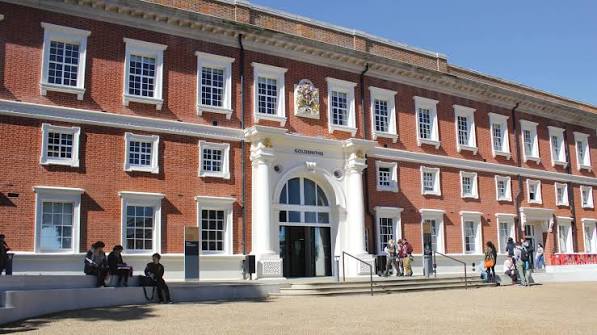
Teaching economics with a gimlet eye: PPE at Goldsmiths
Paul Gunn, convenor of the Economics, Politics and Public Policy BA programme at Goldsmiths, University of London, reflects on how the unrest that followed the financial crash helped inspire a new Politics, Philosophy and Economics degree.
Wednesday 7 October 2026
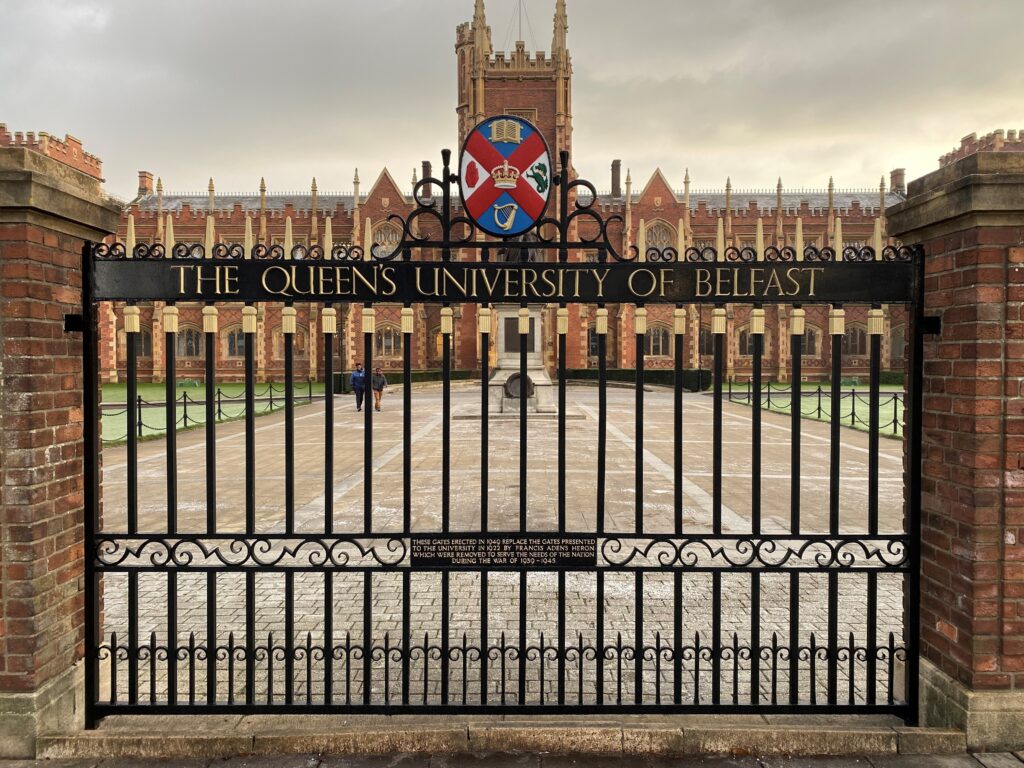
‘Why Should Democracy end at the seminar room door’?: Political Economy Education, Care and Intellectual Promiscuity
What does it take to rethink how we teach economics? John Barry, Professor of Green Political Economy at Queen’s University Belfast, explores what happens when we start by asking students what they want to learn, responding to their needs, and embracing the value of systems […]
Wednesday 7 October 2026

University of Leeds: Rethinking Economics All Over Campus
What does it take to build a new approach to teaching economics? Eric Kemp-Benedict, Associate Professor at the University of Leeds, shares his reflections on the development of the Ecological Economics MSc, his role in shaping and delivering the course, and why collaboration has been […]
Wednesday 7 October 2026