


Meet Amaarah, a pillar of our movement from South Africa. Starting out as a student organiser, she’s become a leading voice who’s shaping the movement’s future. Her driving force? Championing a more democratic international network and working to put South African perspectives at the heart of Rethinking Economics’ new international council structure.
To Amaarah, it’s time to walk the talk. If we want economics education in the hands of students, we have to bake that democratic demand directly into our own organising structures.
An introduction
Amaarah joined the movement when the disconnect between the realities of life in South Africa and the economics that she was being taught became impossible to ignore.
She’d always wanted to get into activism. When the #FeesMustFall protests swept across South Africa ran parallel to her decision to study at Wits University, known for its progressive thinking, she saw her personal drive match the zeitgeist. Students were demanding, free, decolonised and accessible higher education, bringing questions that Amaarah already had about inequality, poverty and youth unemployment to the fore. Young people knew that the challenges they faced had deep roots in South Africa’s apartheid history, and continued to determine life chances long after formal apartheid’s end. Mainstream economics had spent decades ignoring this reality, but its time was officially up.
The unrest brought Amaarah to a sharp realisation: you cannot rewrite the political script without changing the economic engine. As she put it, ‘“If you want to change anything politically, you need to look at the economic structure.”
She chose PPE (Politics, Philosophy and Economics) to better interpret South Africa’s economy and ultimately, rewrite it. What she got was an economics curriculum that was a let-down from day one. She wanted to debate history, ethics and systemic power. Her professors wanted to draw graphs predicting the behaviour of hypothetical rational agents.
Learning about the Phillips curve epitomised the problem. The model oversimplified a complex relationship, predicting that unemployment was a necessary part of keeping inflation low. For Ammarah, ignoring the history of injustice and today’s youth unemployment obscured the real crisis; systemic inequality. Inflation should not be treated as the ultimate metric.
It was ‘just incredibly neoclassical, with a sprinkle of Keynesian economics here and there” Amaarah said.
She felt gaslit by a subject that confidently presented itself as a scientific explanation of the economy’s working, while refusing to acknowledge the reality of her country.
Making the Connection
Looking for the answers her course ignored, Amaarah wanted peers who viewed economics through a social justice lens.
On first look at the Rethinking Economics term’s events, Amaarah knew she’d found her people. The chapter had talks exploring the history underlying the South African economy, introductions to radical African economic thinkers and spaces to explore alternative approaches on their programme. They were speaking her language. And soon, she would find that she had a lot to offer to the movement.
Amaarah remembers drawing on lessons from her politics and philosophy courses to break out of traditional economics ways of thinking in an early meeting. Here, she found deep satisfaction in building other’s confidence and sparking debate. This early experience began what’s become an unwavering commitment to making economics accessible. As she puts it ‘economic issues affect everyone… everyone needs to be able to understand them and challenge the structures that cause them.”
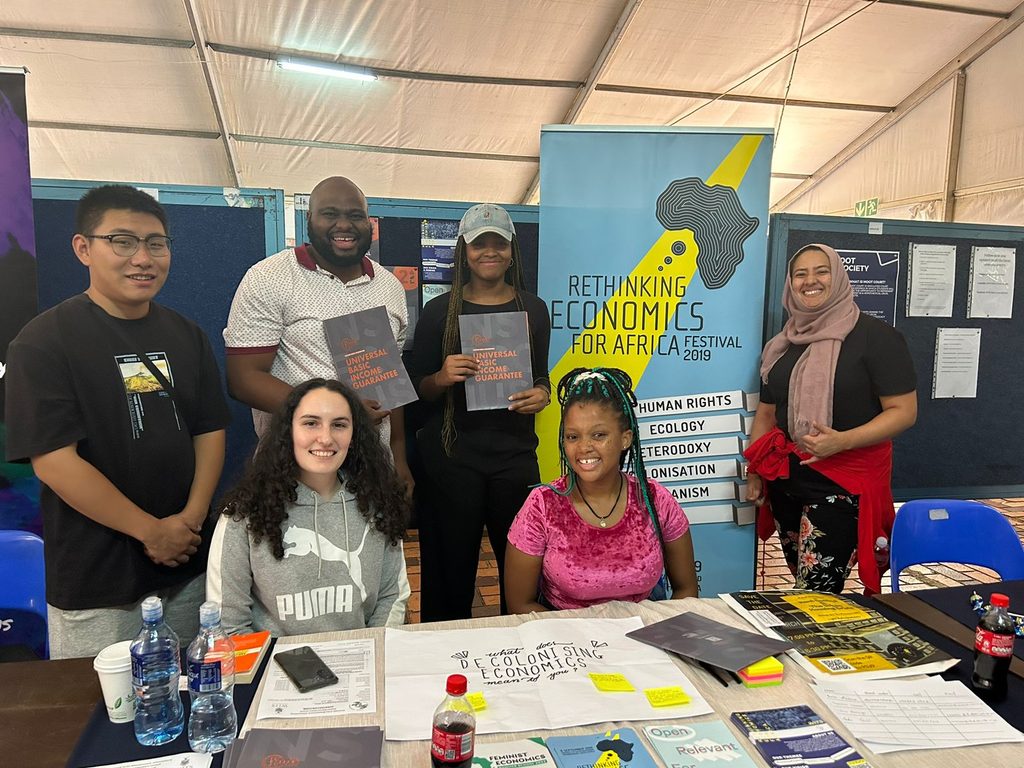
As a student activist, she worked alongside fellow Rethinkers to put her resolve into practice by developing a handbook of economics terms and running a political education festival. Today, as part of a two part-staff team, she continues to run festivals and provide direct support to the growing Rethinking Economics South Africa (REFA) network.
She’s stayed with the movement because it remains a principled, fearless and revolutionary space, giving her hope that another economics is possible. That collective determination has given her strength to draw on in hard times. When a local campaign faces a set-back, she remembers the victories won by fellow rethinkers, and says to herself that ‘we’re not done yet’..
Steps Towards Movement Democracy
Amaarah’s immediate priority is radical democracy. Ultimately, this act is about bringing the movement’s core demands into its own organising structures. For years, REFA has campaigned to put economics education back into the hands of students. Now, with active groups across 10 universities, it’s high time to walk the talk. Practically, this means REFA graduating from the warm incubation it has received at the Institute for Economic Justice (IEJ), a progressive policy think tank in Johannesburg. As Amaarah puts it: ‘it’s time to set it free and let it be an independent movement that’s essentially governed by its members’.
Until now, the lack of formal structure meant national level decisions tended to default to Amaarah and her colleague. ‘It shouldn’t be two staffers making all the decisions’ Amaarah insists. For her, building a democratic structure means giving grassroots activists the power to steer the movement, replacing assumptions about what they need with direct participation. By grounding students in national decision-making, REFA can be moved by the real motivations of front-line activists.
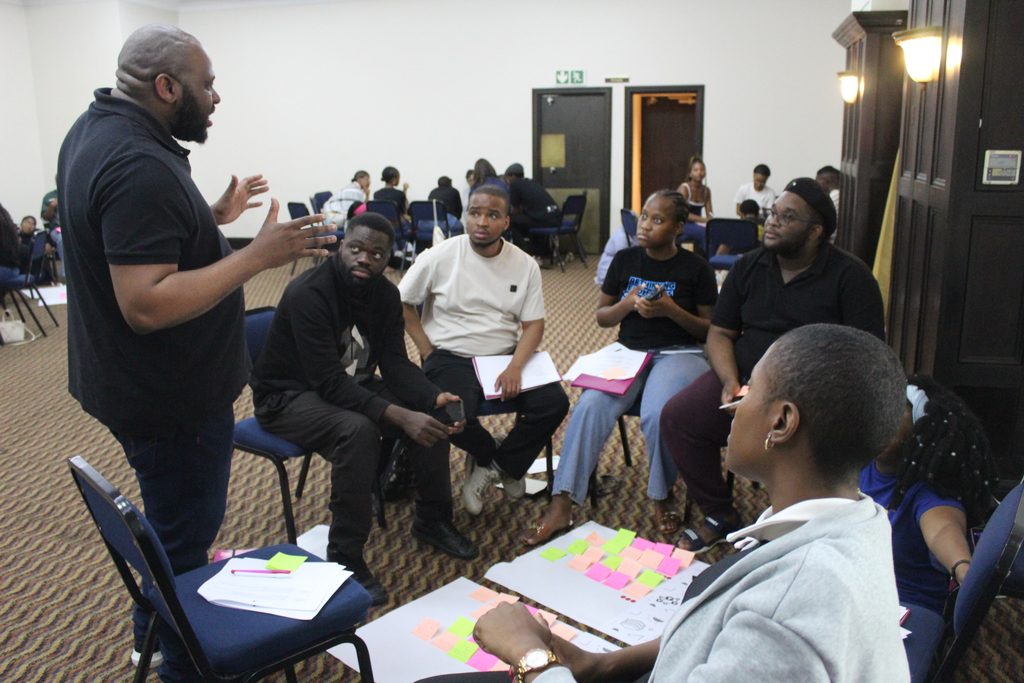
The new democratic structure also offers a clear space to collaborate on answers to the challenges facing young people collaboratively. The high youth unemployment for people aged 15 to 24, currently hovering at 62%, has led to many local activists expressing a desire to find solutions to employment challenges through their movement role. While the national staff team can’t find answers to this systemic issue alone, Amaarah sees an opportunity. The new democratic network can be the space where problem solving becomes a shared task, where the entire network has a route to shape the discussion.
She knows that the network’s activists are ready for the national stage. Acting as the primary bridge between the local groups and national network, she’s seen many brilliant ideas bubble-up with no place to be shared formally. And, that flow of activist knowhow shouldn’t be capped at the national level. For Amaarah, the ultimate goal is an international movement that unites young people around a common struggle, creating a borderless ecosystem to swap organising tactics, experiences and critical pluralist economic ideas.
Putting it into Practice
What does democratising the network actually look like? It starts by defining clear principles, agreeing how to operate and establishing a governance structure with clear lines of responsibility.
To build this from the ground up, Amaarah has been gathering activist views to help define what a council member’s role should entail and how it should be rewarded. The response from the movement has been incredible. When you give activists ownership of the movement they don’t just participate, they share their opinions with force.
The new Member Council, a democratically elected group of Rethinking Economics International members that help set the strategy, direction and governance of the global network, is also another powerful outlet for South African activist energy.
Amaarah already has an idea of what could be discussed in the forum. There’s a sense that Global South perspectives could be more central to the international movement’s messaging. As she puts it ‘climate change is happening now, not in the future. AI is now, with more impact felt in the global south’. These challenges are happening now, not in some distant future. They’re realities that young people are already living with. Why can’t the international movement state this head-on? Building these crossborders connections through the International Council is exactly what gives the movement its bite.
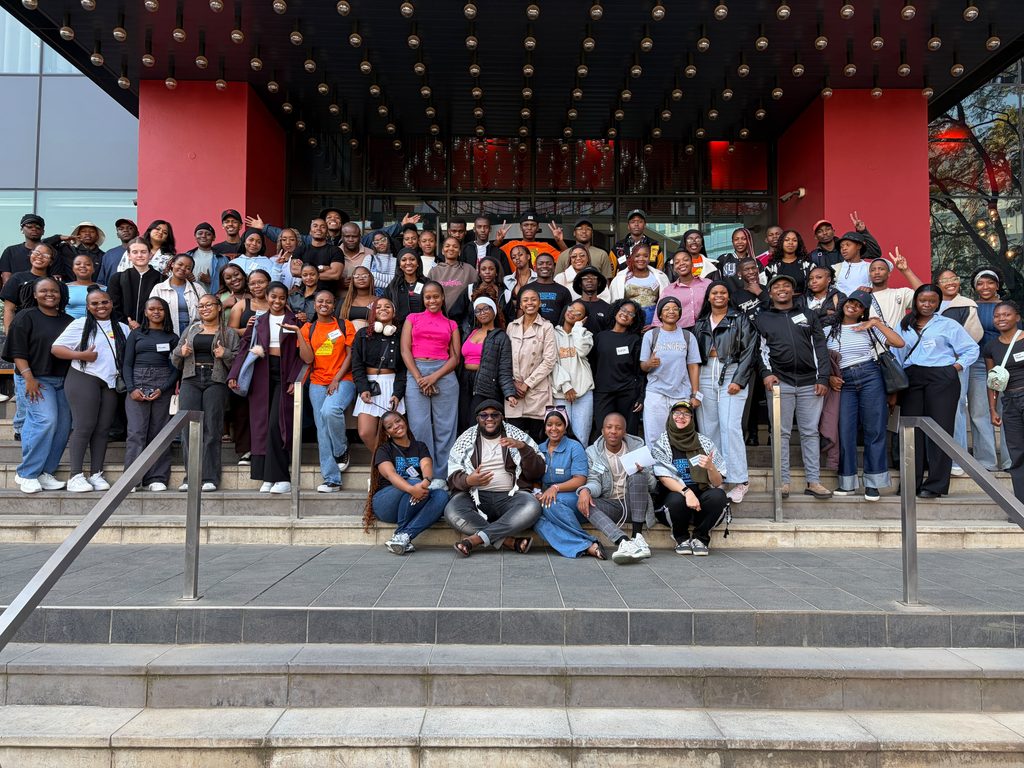
What’s more, as young people lose faith that they can build a life better than their parents within today’s broken economy, the need for global collective action intensifies. National responses cannot fix the precarity faced by young people. The demand for change must come from the global level. Amaarah calls for an upsurge in action from young people everywhere because ‘politics is going to get you either way. Very few can say they benefit from how the economy is coming for you. Join Rethinking Economics as a movement that benefits those within the movement.’
Ultimately, for Amaarah, democratisation is the glue that can unite youth voices and prove how powerful student leadership can be in shifting economic thought. By giving activists a genuine say in decisions, the movement directly practices the democracy that it demands. In this way, the movement is a ‘microcosm of what the world could be’, that gives Amaarah hope for change – something to hold onto in a world hellbent on stripping away our belief in a different kind of economics.
Rethinking Economics is at an exciting moment. After launching individual membership, we are now reorganising our governance structure to enable it to better lead the network in this next phase. Our International Members Council will be made of representatives from Councils, what we commonly think of as the Regional and National Networks, geographically defined organisations, networks or collectives advancing the mission of Rethinking Economics. Read more about the process here.
Contributors
Laura Williams
Laura joined Rethinking Economics as Communications Lead in 2026. She first became involved with the movement while serving as Campaigns Officer at the University of University of Manchester Students’ Union. Frustrated by the limitations of mainstream economics in explaining an increasingly unstable world and addressing human needs, she was

Share this article

Measuring What Matters: Inclusive and Sustainable Growth Beyond GDP
Reporting from this summer’s Beyond GDP conference in Lusaka, Thomson captures the lively debates behind the growing conversation about how Zambia can measure progress beyond economic growth.
Wednesday 7 October 2026
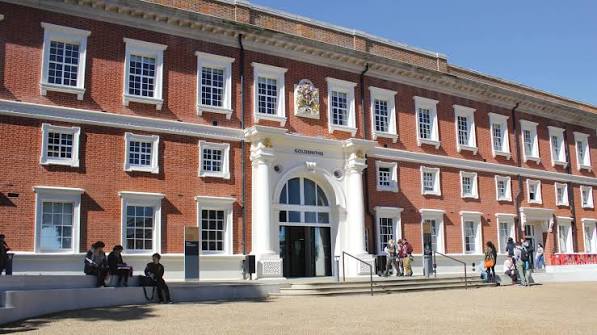
Teaching economics with a gimlet eye: PPE at Goldsmiths
Course convenor Paul Gunn reflects on how the unrest that followed the financial crash helped inspire a new Politics, Philosophy and Economics degree.
Wednesday 30 September 2026
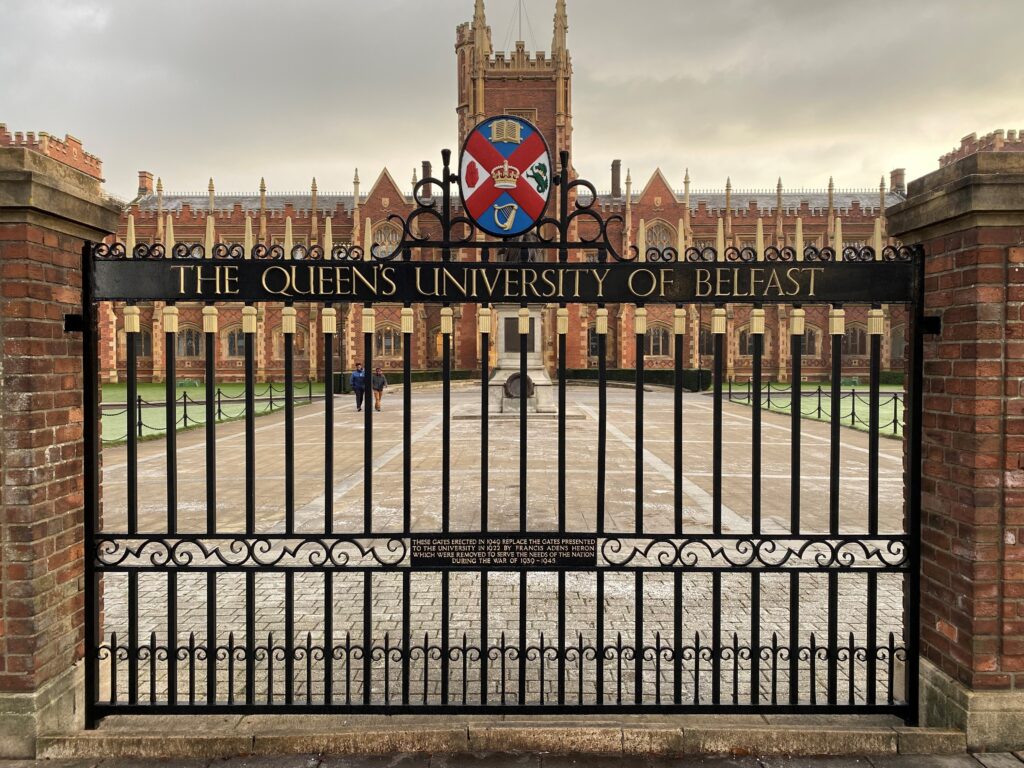
‘Why Should Democracy end at the seminar room door’?: Political Economy Education, Care and Intellectual Promiscuity
Queen's University Belfast Professor John Barry explores what happens when we start by asking students what they want to learn, responding to their needs, and embracing the value of systems thinking.
Wednesday 16 September 2026