

REI Update: Trump announced tariffs on Brazil on 31 July that featured many exemptions, including some of the industries Desajuste mentions below: orange juice, EMBRAER planes, as well as fertiliser, wood pulp and minerals. However beef, coffee and cacao still face 50% tariffs. Brazil is still assessing the full economic impact of these tariffs, and we will feature reactions in subsequent blog posts.
The political nature of Trump’s tariffs, to the detriment of trade relations, took everyone by surprise. The previous tariffs had some economic basis, but ours was political from the start. Brazil is the only one among the victims of Trump’s tariffs that has a trade deficit with the country. Last year alone, we imported almost 7 billion dollars more than we exported to the US.
In Trump’s logic, the tariffs fulfill three objectives:
- In Brazil: to generate uncertainty with the aim of weakening the Brazilian Supreme Court and the Executive.
And in the US:
- to signal international political power to the Trump base
- to retaliate against the threat of a parallel BRICS currency to the sovereignty of the dollar.
But how do the proposed tariffs affect Brazil?
Brazil and the US have very close trade relations. We mainly export commodities and lightly processed products such as steel, fruit and, in another sphere, airplanes. For EMBRAER, the tariffs represent an economic embargo on the sector, since they account for the majority of sales. Orange juice is also another delicate product: we are the largest exporter of orange juice in the world and 50% of what is exported goes to the US (in volume). They will also need to switch to lemon juice: of all the orange juice the US CONSUMED in 2024, 81.5% was imported and Brazil was the main supplier. The US is Brazil’s second largest trading partner in terms of both imports and exports, but only 1.3% of what the US imports comes from Brazil, making us the 18th largest trading partner for the Americans.
A study by CEDEPLAR/UFMG estimates a loss of more than 100,000 jobs, as well as a 0.16% drop in GDP and a 2.44% drop in Brazil’s total exports. The agricultural and manufacturing sectors would be the most affected, but all states would suffer a reduction in GDP, especially AM (-0.67%), SC (0.31%) and MS (-0.29%).

But couldn’t we send exports to other markets like Europe and China?
Although theoretically possible, as long as the other markets are able to absorb the surplus supply, in practice this is very unlikely.
There are health-related, logistical and cultural barriers and even import quotas that limit the ability to redirect exports.
However, we can’t underestimate the importance of deepening trade relations with other markets. Some recent examples are the Mercosur-EU treaty and the expansion of trade with Middle Eastern countries.
The Brazil-EU agreement is also another option – but it could take more than 10 years to be fully implemented. And trade itself takes time: an order for EMBRAER jets, for example, takes years of negotiation and production; it’s not trivial.
How can Brazil respond to Trump’s tempestuousness?
In the event of negotiations, it would be possible to sue the US at the WTO and adopt retaliatory tariffs based on the new Reciprocity Act. However, there would be no winners in a trade war, as many of the multinationals operating in Brazil are American. In any case, it is vital that Brazilian institutions do not give in to the misguided adventures of a megalomaniacal plutocrat and work towards a solution that contributes to the future and national sovereignty.
In defense of national sovereignty
Desajuste, together with hundreds of civil society organizations, has signed The Letter in Defense of National Sovereignty.
In international relations, Brazil is governed by the principles of national independence, the prevalence of human rights, non-intervention, as well as the principle of equality between nations. This is what our Constitution states.
We demand the same respect as other nations. We repudiate any form of intervention, intimidation or admonition that seeks to subordinate our freedom as a democratic nation. The Brazilian nation will never give up its hard-won sovereignty. More than that: Brazil knows how to defend its sovereignty.
Read the letter in full at this link.
This post originally appeared in Desajuste – the Brazilian network of progressive economists’ Substack in Portuguese.
Contributors
Desajuste – Brazilian network of progressive economists
Share this article
Topics
What kind of Brazil will we leave behind?
Ahead of Brazil’s election on Sunday 25 October, young economists address the challenges they face today and call for a structural response to the crisis.
Friday 23 October 2026

The Economics of Feminism: Beyond Elite Empowerment and Digital Visibility
Any serious observer who reflects on the condition of Egyptian women -socially, culturally, and economically- will inevitably confront an extremely complex landscape, indeed a deeply troubling one, particularly with regard to the absence of genuine representation (according to World Bank reports, women’s participation in the […]
Thursday 1 October 2026
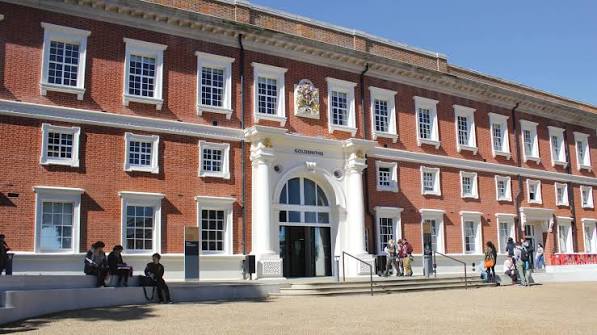
Teaching economics with a gimlet eye: PPE at Goldsmiths
Paul Gunn, convenor of the Economics, Politics and Public Policy BA programme at Goldsmiths, University of London, reflects on how the unrest that followed the financial crash helped inspire a new Politics, Philosophy and Economics degree.
Wednesday 30 September 2026