
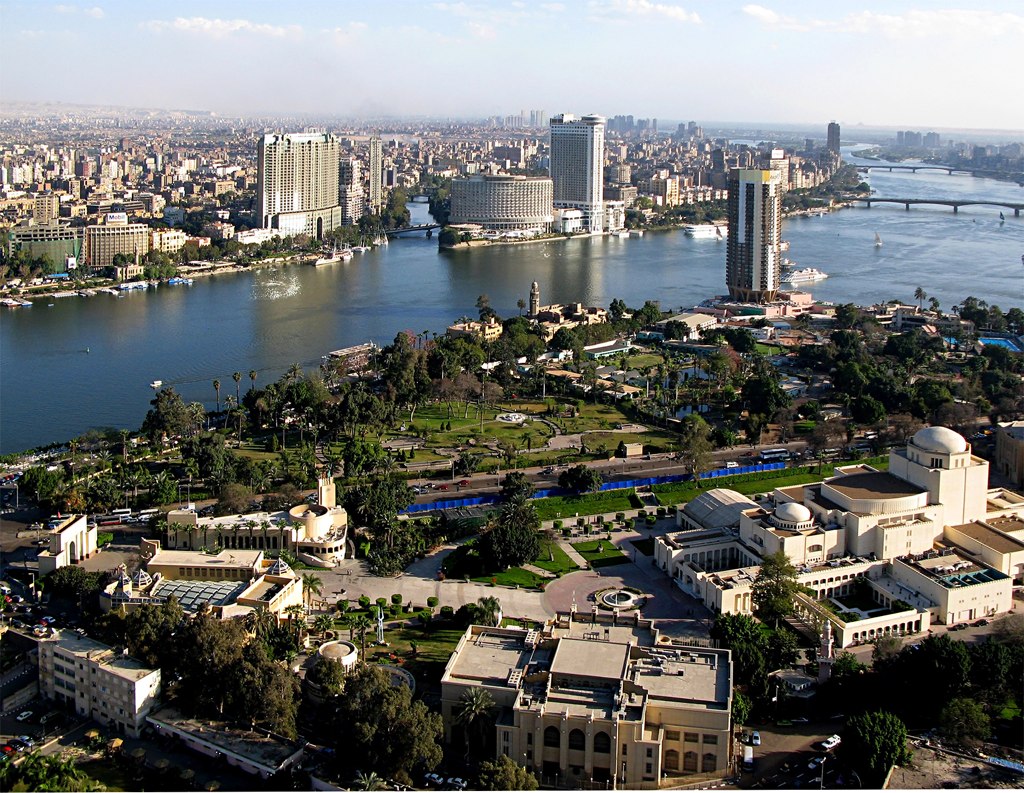
Any serious observer who reflects on the condition of Egyptian women -socially, culturally, and economically- will inevitably confront an extremely complex landscape, indeed a deeply troubling one, particularly with regard to the absence of genuine representation (according to World Bank reports, women’s participation in the labor market is estimated at around one in every five women). Within this context, our public sphere wavers between two opposing ends, neither of which truly reflects the lived suffering of the overwhelming majority of women.
This gap is not merely statistical. From an economic perspective, this crisis of representation reflects deeper structural distortions in how women’s labor is defined, valued, and measured. Feminist economics has long challenged the narrow identification of ‘work’ with formal, waged employment, emphasizing instead the centrality of unpaid care labor, informal sector participation, and reproductive work domains in which the majority of Egyptian women are heavily engaged yet systematically undervalued.
Within this context, Egyptian feminist representation appears increasingly polarized between two dominant -yet equally limited- models: an elite-oriented “corporate feminism” and a highly mediated, consumer-driven form of digital femininity that may be described as a “feminism of triviality.” Neither, we argue, adequately reflects the lived realities of most Egyptian women. But, one should be cautious that these are heuristic categories rather than exhaustive representations.
Elite Feminism and the Limits of Representation
The first model -carefully deconstructed in Feminism for the 99%: A Manifesto for a New Social Movement by Cinzia Arruzza, Tithi Bhattacharya, and Nancy Fraser- is often termed “corporate feminism” or “neoliberal feminism.”
At its core, neoliberal feminism embodies a profound structural gap between the rise of a handful of exceptional women to senior positions within multinational corporations or major domestic institutions, and the lived realities of the vast majority of women, particularly those engaged in precarious labor conditions, including informal employment, unpaid domestic work, and underpaid service-sector roles, spanning both lower-middle and economically marginalized strata. While our critique of this “neoliberal feminism” does not target successful women as individuals, it does challenge an intellectual framework and a movement that has chosen to disregard the dire conditions of most women. Instead, it promotes a very limited set of icons and role models that represent neither the majority of women nor, for that matter, the majority of men.
This is a “feminism” that celebrates the breaking of the “glass ceiling” for a few, while leaving millions trapped in what might be described as the “economic basement.” Put differently, it is a feminism that approaches women primarily as “investment-oriented subjects”- as Homo Economicus.
Digital Visibility and the Political Economy of Triviality
On the opposite end of this distressed spectrum -and alongside the growing dominance of social media and the so-called “attention economy”- the Egyptian context has witnessed the steady rise of what may be described as the “feminism of triviality.” One of the most visible manifestations of this phenomenon is the emergence of figures popularly known as “Umm X,” who are presented to society as populist icons explored at length in ‘The System of Triviality: A World of Semi-Celebrities Governed by Algorithms‘. In the Middle East and North Africa (MENA), calling a woman “Umm so-and-so” (أم فلان) carries layered social, cultural, and symbolic connotations that extend well beyond its literal meaning of “the mother of X.” One of these connotations is a “gendered dimension.” Addressing a woman primarily as “Umm X” can subtly reduce her public identity to motherhood, eclipsing her individuality, profession, or personal achievements. In this sense, the practice both honors and constrains it elevates motherhood while simultaneously reinforcing a normative expectation that a woman’s primary social value lies in being a mother.
While we, as the authors of this article, affirm our principled commitment to individual freedom of expression and personal choice, it is nevertheless evident that the “Umm X” phenomenon has promoted models of womanhood that bear little, if any, relation to the concerns of the majority of working women. These figures circulate highly mediated, consumer-oriented images that remain disconnected from the structural hardships most women actually endure. We should also acknowledge that these digital personas are often rational, if desperate, adaptations to crushing economic precarity survival strategies adopted by women who have been left with few other viable routes to income or visibility.
In contemporary Egyptian reality, women who spend their days navigating multinational corporations, local start-ups, public or private institutions, or the relentless struggle of daily survival face layered difficulties and deep structural challenges. Challenges entirely absent from the glossy, consumable models exported through screens. In this approach, we attempt to unpack this socially and culturally strained reality and to offer a modest proposal “outside the box”, in the hope that it might help Egyptian feminist movements rediscover an authentic and shared ground with Egyptian society itself, rather than entrenching themselves in imported battles that bear little relevance to local lived realities.
Revisiting the “Sexual Revolution”: Importing Illusory Battles
To understand the crisis of imported feminist discourse, it is instructive to examine the profound reassessments currently taking place within the West itself. In 2022, the British journalist and researcher Louise Perry published her widely discussed book The Case Against the Sexual Revolution: A New Guide to Sex in the 21st Century. Although Perry does not adopt a primarily religious position, she advances a radical critique of the Western sexual revolution -from its foundational roots in the expansion of contraceptive technologies to its most destructive manifestations, including the commodification of the body through pornography, the normalization of “one-night stand” culture, and the reduction of relational legitimacy to the single criterion of “mutual consent.”
One of Perry’s most significant arguments is that so-called “unrestricted sex,” or sexual permissiveness, has never genuinely functioned as a tool for women’s empowerment. Rather, it has increasingly operated as a capitalist and patriarchal mechanism that facilitates the satisfaction of unrestrained male desires while absolving men of responsibility, commitment, or long-term obligation. In her concluding chapter, Perry arrives at a conclusion that may appear conservative at first glance yet is grounded in sociological evidence: that the institution of marriage, with its normative boundaries and expectations, continues to offer women a meaningful form of protection and a relatively secure social framework.
The Egyptian reader (and indeed the Arab reader in most Arabic-speaking countries) may view these debates as purely Western intellectual disputes, and as an inevitable outcome of feminism in its materialist forms. This is a legitimate critique. Yet what concerns us here is the following point: if we are to produce a feminist discourse capable of genuinely engaging with the concerns of women in Egypt, those working in the feminist field must undertake a serious and unprejudiced reading of Egyptian social reality.
The Egyptian predicament lies in the fact that the dominant models on offer -whether neoliberal corporate feminism or the feminism of triviality- represent only a microscopic segment of society. Egypt is not experiencing the early stages of a “sexual revolution” comparable to that of the West in the 1960s. Nor are all Egyptian women investors, board members, or executives. Equally, they are not all content creators appearing on TikTok morning and night.
It is worth acknowledging that the tension between the “girl boss” and the “tradwife” or, in Egyptian terms, between corporate feminism and the feminism of triviality, is not unique to Egypt. The West has produced its own versions of this binary, and the critique of neoliberal feminism advanced by thinkers such as Nancy Fraser has become a mainstream position in Anglophone feminist discourse. What is distinct about the Egyptian context, however, is the degree to which both poles of this binary are borrowed from, or mediated through, external cultural logics, while a rich and largely underacknowledged tradition of indigenous feminist thought remains sidelined. Egypt has produced its own feminist voices, from Huda Sha’arawi’s early twentieth-century activism to the sociological and literary feminism of Nawal El Saadawi, and more recently the grassroots organizing that emerged from the 2011 revolution. Any honest account of Egyptian feminist discourse must reckon with this tradition, rather than treating the field as if it were a vacuum populated only by imported frameworks.
Academic and social realities consistently show that the majority of women in Egypt are being ground down by an increasingly oppressive standard of living, while carrying enormous educational and economic burdens. These are women encircled by exhausting obligations toward their children -especially in cases where the mother is the sole provider- obligations that have intensified with the rise of psychological and pedagogical awareness, which has significantly increased mothers’ “mental load.” Added to this are the complex daily challenges they face with their spouses under the pressure of inflation, and finally, the struggle to assert presence and survival as women within a society that continues to carry deep-seated patriarchal residues.
Any feminism that fails to read this layered and entangled reality -a reality shaped by culture, local environment, economic structures, and religion- will ultimately amount to little more than an echo of hollow, imported slogans. Such discourse floats within an elitist vacuum, never truly touching the fragile and burdened ground on which the Egyptian woman actually stands.
Recovering Indigenous Feminist Traditions
Before advancing a proposal, it is worth grounding this analysis in the Egyptian and wider MENA feminist intellectual tradition that has long grappled with precisely these tensions. Nawal El Saadawi’s work -particularly Women and Sex (1972) and The Hidden Face of Eve (1977)- subjected both patriarchal religious interpretation and Western liberal individualism to simultaneous critique, decades before such a synthesis became fashionable in global feminist theory. Fatima Mernissi (Moroccan writer and sociologist) similarly offered an internal Islamic feminist critique that rejected the false choice between secular liberation and religious submission. More recently, scholars such as Leila Ahmed (Egyptian-American scholar) have examined how colonial discourses co-opted feminist language to serve imperial projects, a dynamic directly relevant to any discussion of “imported” feminist frameworks. These traditions offer a far more useful point of departure for Egyptian feminist discourse than either the neoliberal or social-media models discussed above and any serious proposal must build explicitly on them.
Toward a Feminism of the 99%: A Proposal
In light of the foregoing and drawing on a sociological and historical reading of Egyptian society, we propose this alternative foundation for a feminist discourse that genuinely represents the majority. Such a project must also draw from regional intellectual resources, integrating insights from Arab feminist scholarship that has long interrogated the intersections of patriarchy, coloniality, and economic dependency. This would allow for a feminism that is not merely reactive to global trends, but actively generative of new theoretical and practical paradigms rooted in the lived realities of the region.
Central to this proposal is a feminist economics perspective, one that takes seriously the question of what counts as work. The unpaid labor of social reproduction (childcare, domestic management, emotional support) remains systematically excluded from conventional economic measurement, even as it constitutes the invisible foundation of the formal economy. For Egyptian women, this exclusion is not abstract: it translates into pension gaps, legal invisibility, and the double burden carried by women who participate in the paid labor force while continuing to shoulder the full weight of domestic life. A “feminism of the 99%” must insist that this labor be named, counted, and compensated whether through legal reform, social policy, or changes in how institutions account for women’s contributions.
First: A balanced approach, not chaotic liberation.
What is needed is a feminist paradigm that recognizes the central issue for Egyptian women is not “sexual freedom” in an individualistic or consumerist sense detached from material conditions. The priority lies in a sound understanding of sexuality and human relationships that is rooted in dignity, economic justice, and structural equality, not in either moralistic restriction or in the marketization of intimacy that capitalist logic tends to produce.
The critique here is not directed at feminist demands for bodily autonomy, which remain foundational; it is directed at the appropriation of such demands by commercial and patriarchal interests that strip them of their emancipatory content. Practically, this can be translated into demanding strict legislation against the exploitation of women in targeted advertising and rejecting media models that reduce women’s value to physical attractiveness.
Egyptian feminist discourse must also adopt the principle that unequal relationships -the exploitation of a poor woman by a wealthy man, or of an employee by her manager- remain fundamentally exploitative even when framed in terms of apparent “consent.” It is important to clarify that this critique does not describe the aims of Western feminist traditions as such, many of which explicitly resist commodification and exploitation.
Rather, it addresses particular interpretations and socio-economic appropriations of feminist language within global capitalist systems, where emancipatory rhetoric can, at times, be absorbed into market logics. Practically, this can be translated into demanding strict legislation against the exploitation of women in targeted advertising and rejecting media models that reduce women’s success to physical attractiveness (as is evident in some forms of the feminism of triviality).
Genuine liberation begins when society understands that the female body is not a public space for visual or commercial consumption. Moreover, Egyptian feminist discourse must adopt the principle that unequal relationships -such as the exploitation of a poor woman by a wealthy man, or of an employee by her manager- even when framed in terms of apparent “consent,” remain fundamentally exploitative relationships that ultimately oppress women.
A central task is to challenge the exclusion of unpaid care work from economic recognition. Women’s labor in childcare, household management, and emotional support constitutes the invisible foundation of the formal economy. Yet it remains absent from national accounting systems, social protection frameworks, and legal recognition.
Addressing this requires both conceptual and policy shifts:
- integrating care work into economic measurement,
- expanding social protection systems,
- investing in childcare infrastructure,
- and recognizing the dual burden faced by working women.
In addition, economic empowerment cannot be reduced to labor market participation alone. In contexts of high inflation, informal employment, and wage stagnation, mere inclusion in the labor market does not guarantee dignity or security.
A more substantive framework must address:
- wage conditions,
- job stability,
- access to social insurance,
- and the distribution of domestic labor.
Second: Reconciliation with the religious component as a root of identity.
Egyptian feminism must recognize that replicating the Western experience—one premised on antagonizing or excluding religion or treating it as the sole obstacle to liberation—is a path destined to fail from the outset. Such an approach will not advance women’s conditions in any meaningful way. In Egypt, both Islam and Christianity are not marginal or purely ritual practices; they constitute a core component of identity and a deep moral and value-driven force shaping the Egyptian social imagination. Any discourse that clashes directly with this component immediately loses its popular grounding. This insight resonates with the thesis of the prominent philosopher and sociologist Jürgen Habermas on the notion of the “post-secular.” Within this framework, Habermas rejects the rigid, hierarchical view of secularism and instead calls for a process of “mutual learning” between religious and secular citizens. From this perspective, feminism can view religion as a moral reservoir capable of restraining the excesses of capitalism, which tends to transform everything -including feminist liberation itself- into a mere investment project or a process of commodification.
But we should be cautious here. In practice, religious institutions and interpretations can reproduce gender hierarchies. We acknowledge this tension and admit that “religion as moral reservoir” requires critical theological engagement, not passive acceptance. To move beyond abstract theoretical propositions, operationalizing this ‘critical theological engagement’ requires a direct, methodical encounter with established religious jurisprudence, particularly concerning contentious issues like inheritance laws and formal labor participation. In the Egyptian context, this necessitates leveraging the dynamic traditions of internal legal and theological interpretation, such as the Islamic jurisprudential emphasis on Maqasid al-Shari’a (the higher objectives of the law) and foundational Christian social teachings regarding human dignity. A grounded feminist economics must argue that historical juristic rulings, which often institutionalized unequal financial provisions, were sociologically predicated on a strict male-breadwinner model. As the macroeconomic reality drastically shifts increasingly thrusting women into the role of primary financial providers amid severe inflation and structural precarity theological interpretations must simultaneously evolve. By engaging directly with these jurisprudential mechanisms, feminist scholars can ensure that the core religious imperatives of justice (‘adl) and social equity are not merely historical artifacts but are actively preserved and actualized within modern labor frameworks and economic policies.
Third: Philosophical depth in the face of the commodification of success.
Finally, a meaningful feminist economics must resist the reduction of women to either market actors or consumable images. The value of women’s lives cannot be measured solely through income, productivity, or visibility. We believe that society is in urgent need of feminism endowed with philosophical and intellectual depth -a movement that transcends populism and capitalism alike, and that refuses to measure a woman’s worth or success solely by the amount of money she earns or the height of her career ascent. We must reject the false dichotomy that traps women between two grinding millstones: aggressive capitalist models (corporate or neoliberal feminism), on the one hand, and icons of consumerist triviality (the feminism of triviality), on the other. What is needed is a feminism that celebrates the everyday struggle of ordinary women, defends their economic and social rights in courtrooms, factories, and homes, and articulates a discourse that recognizes women as whole human beings—neither cogs in a capitalist machine nor commodities in the attention economy.
Conclusion: Toward a Feminist Economics Grounded in Egyptian Reality
In conclusion, any meaningful attempt to reconstruct feminist discourse in Egypt must move beyond representational debates toward a substantive engagement with economic realities. The proposals above are not merely cultural prescriptions; they are, at their core, economic arguments. Feminist economics -as developed by scholars such as Diane Elson, Ailsa McKay, and more recently the Feminist Green New Deal movement (FGND) offers a methodological toolkit that is directly applicable here: expanding GDP measurement to include care work, designing social protection systems that reflect women’s actual life patterns, and subjecting macroeconomic policy to gender impact assessment. The question for Egyptian feminist movements is whether these tools can be decolonized and adapted, rather than adopted wholesale. The answer, we believe, lies in the intellectual tradition already present in Egyptian and MENA feminist scholarship, a tradition that has long understood that economic liberation and cultural dignity are inseparable demands, not competing ones.
The global feminist movement is itself in a period of fragmentation and reassessment, as scholars such as Amia Srinivasan (in The Right to Sex) and Sophie Lewis (in Enemy Feminisms) have demonstrated. Srinivasan’s examination of the intersection between desire, politics, and structural inequality, and Lewis’s dismantling of feminisms that serve imperial or market logics, both speak directly to the tensions this article has identified. Egypt need not wait for Western feminism to resolve its own contradictions before developing an authentically grounded feminist economics. The material conditions are pressing, the intellectual traditions are available, and the majority of Egyptian women carrying the weight of inflation, unpaid labor, legal inequality, and social expectation cannot afford to wait.

Teaching economics with a gimlet eye: PPE at Goldsmiths
What does it take to rethink how we teach economics? Paul Gunn, convenor of the Economics, Politics and Public Policy BA programme at Goldsmiths, University of London, reflects on how the unrest that followed the financial crash helped inspire a new Politics, Philosophy and Economics […]
Wednesday 7 October 2026
‘Why Should Democracy end at the seminar room door’?: Political Economy Education, Care and Intellectual Promiscuity
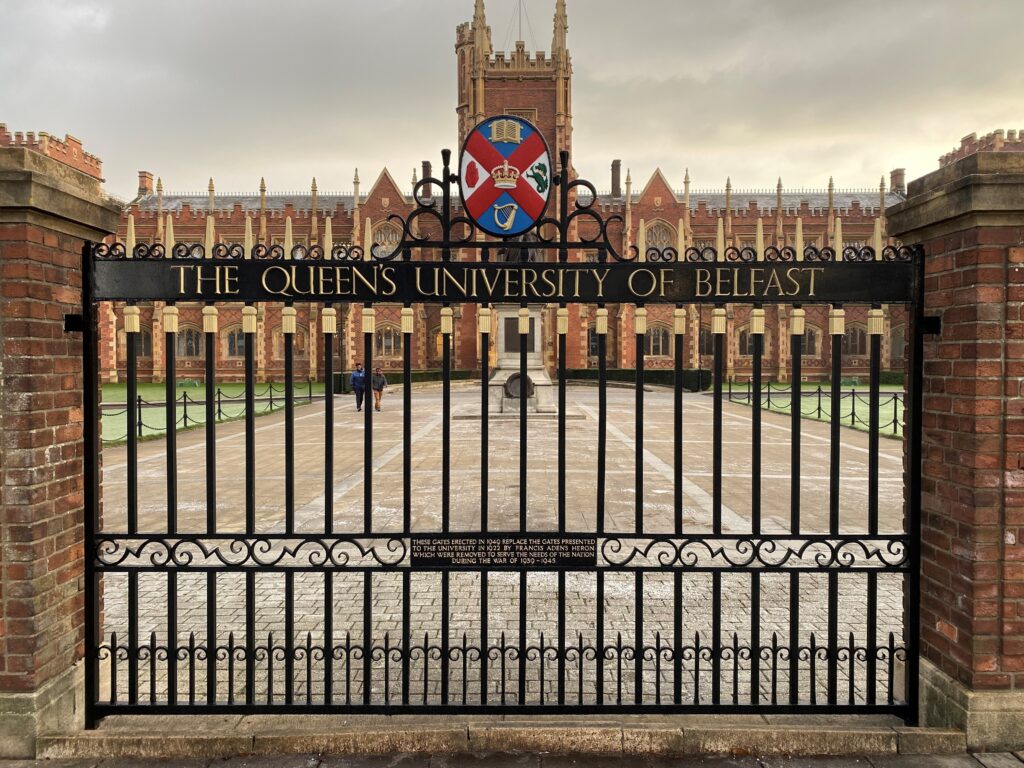
What does it take to rethink how we teach economics? John Barry, Professor of Green Political Economy at Queen’s University Belfast, explores what happens when we start by asking students what they want to learn, responding to their needs, and embracing the value of systems […]
Wednesday 7 October 2026

University of Leeds: Rethinking Economics All Over Campus
What does it take to build a new approach to teaching economics? Eric Kemp-Benedict, Associate Professor at the University of Leeds, shares his reflections on the development of the Ecological Economics MSc, his role in shaping and delivering the course, and why collaboration has been […]
Wednesday 7 October 2026