

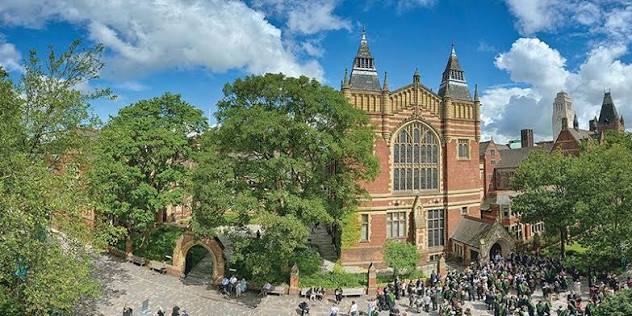
What does it take to build a new approach to teaching economics? Eric Kemp-Benedict, Associate Professor at the University of Leeds, shares his reflections on the development of the Ecological Economics MSc, his role in shaping and delivering the course, and why collaboration has been at the heart of making the programme a reality.
This is part of our five-part blog series, Economics outside the Classroom. We’re showcasing examples of innovative, transformational economics teaching taking place outside of the traditional university department setting. All of these case studies were identified as part of Rethinking Economics UK’s report into 20 UK curricula.
The Ecological Economics MSc programme at the University of Leeds launched in 2016. It was created by Dan O’Neill, who led it through 2023. After Dan moved to the University of Barcelona in 2023, I was hired to take over programme leadership.
While there is nothing less exciting than university administrative structures, it helps to know where the programme sits. Staff from the Sustainability Research Institute (SRI) lead the programme’s modules. SRI sits within the School of Earth, Environment, and Sustainability (SEES), which is in the Faculty of Environment and Social Science (FESS). Meanwhile, the Economics Department sits within the Leeds University Business School (LUBS). (Yes, we go by both ‘University of Leeds’ and ‘Leeds University’.) So, we are outside the Economics Department, but as I explain below, we collaborate with them closely.
When I joined the programme, the University of Leeds was in the midst of a university-wide process called ‘Curriculum Redefined’. This offered an excellent opportunity to review and potentially revise the programme. Given the university’s goal of providing research-led education and noting the substantial staff turnover since the programme was launched, I asked members of the teaching staff – who are also researchers – to describe the modules they wish they could teach. With those descriptions as inputs into a highly productive Away Day – which included staff from the Economics Department – we identified a new programme structure. Module leaders then designed their new or revised modules, which we launched in the 2025/26 academic year.
The current programme is structured around two pathways: ‘Values and Governance’, focused on economic, social, and environmental justice; and ‘Ecological Macroeconomics’, focused on macroeconomic policy analysis. All students take a 30-credit introductory module that equips them with a solid understanding of core ecological economics principles. They also take a 30-credit methods module that exposes them to a wide range of methodologies. Students on the Values and Governance pathway take a 15-credit module at LUBS and a further 15-credit module as part of the core curriculum. Similarly, the Ecological Macroeconomics pathway includes a 15-credit LUBS module as well as a 15-credit core module. We also offer a 15-credit optional module on Finance for Sustainability.
The changes made under Curriculum Redefined resulted in a substantially different programme from what went before. While we have only one cohort’s input, the end-of-module feedback was very positive for each of our modules. We have also received tremendous support from our external examiner. We are combining students’ critical feedback with our external examiner’s suggestions and our own critical reflections after a year of teaching to inform modifications for the coming year.
As I noted earlier, our students take LUBS modules from staff in the Economics Department. Also, students from LUBS take our modules as options, particularly Finance for Sustainability and Ecological Macroeconomics. This cross-faculty teaching is an example of the collaboration I alluded to above – we are outside the Economics Department but not entirely disconnected from it.
Our collaboration is made much easier by the nature of the University of Leeds’ Economics Department. It is the only pluralistic department among the prestigious Russell Group of UK universities. Many of the staff are post-Keynesians and some have published in Ecological Economics. While the collaboration pre-dates my arrival at the university, I already knew some of the staff because I publish in post-Keynesian journals and attend post-Keynesian conferences. Our faculties continue to learn from each other through an ongoing dialogue that informs our research and practice, and we co-supervise PhD students, some of whom are graduates of our programme who entered the Economics Department for their PhDs.
To me, this sort of collaboration is ideal. Given the strong and rising demand for pluralism from younger scholars, as well as the demand for policy-relevant economic analysis, I can envisage a future in which today’s non-mainstream tributaries, such as post-Keynesian economics, join the mainstream. (Perhaps one day the Cambridge Journal of Economics will be a top journal, while the American Economic Review will be seen as a specialist journal focused on neoclassical economics!) But I do not see ecological economics taking over economics departments because the urge to interdisciplinarity is too strong. Rather, I see what we have created somewhat by accident: ecological economics in an explicitly interdisciplinary academic home and thriving through active and lively collaboration.
Contributors
Eric Kemp-Benedict
Associate Professor of Ecological Economics at the University of Leeds

Share this article
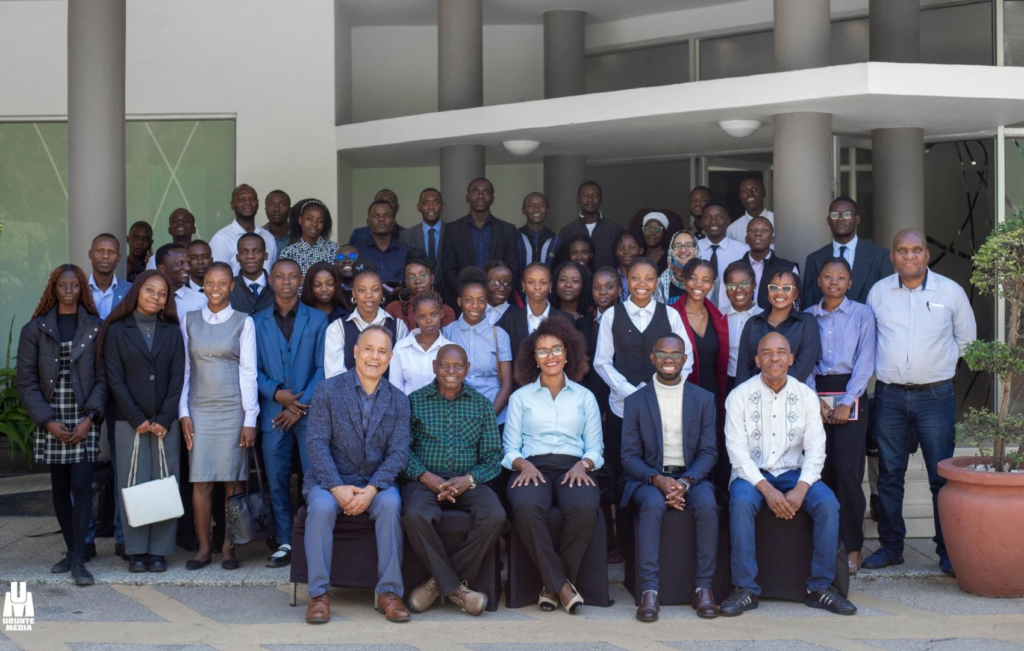
Measuring What Matters: Inclusive and Sustainable Growth Beyond GDP
Participants came from public and private Universities, think-tanks, and research institutions namely Mulungushi University (MU), the Copperbelt University (CBU), Kwame Nkrumah University (NKU), ZCAS University, Information and Communication University (ICU), Cavendish University Zambia (CUZ), the University of Zambia, Kabwe Institute Of Technology (KIT), Amin Centre for Policy Research, and United Nations Zambia Youth.
Wednesday 7 October 2026
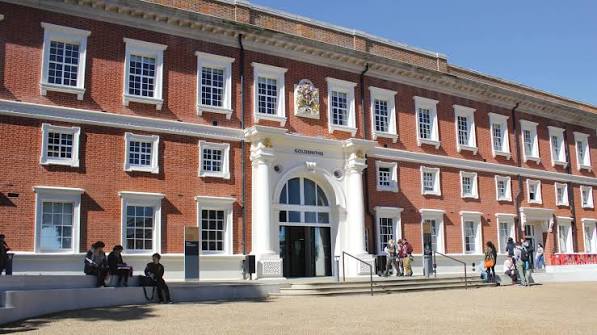
Teaching economics with a gimlet eye: PPE at Goldsmiths
What does it take to rethink how we teach economics? Paul Gunn, convenor of the Economics, Politics and Public Policy BA programme at Goldsmiths, University of London, reflects on how the unrest that followed the financial crash helped inspire a new Politics, Philosophy and Economics […]
Wednesday 7 October 2026
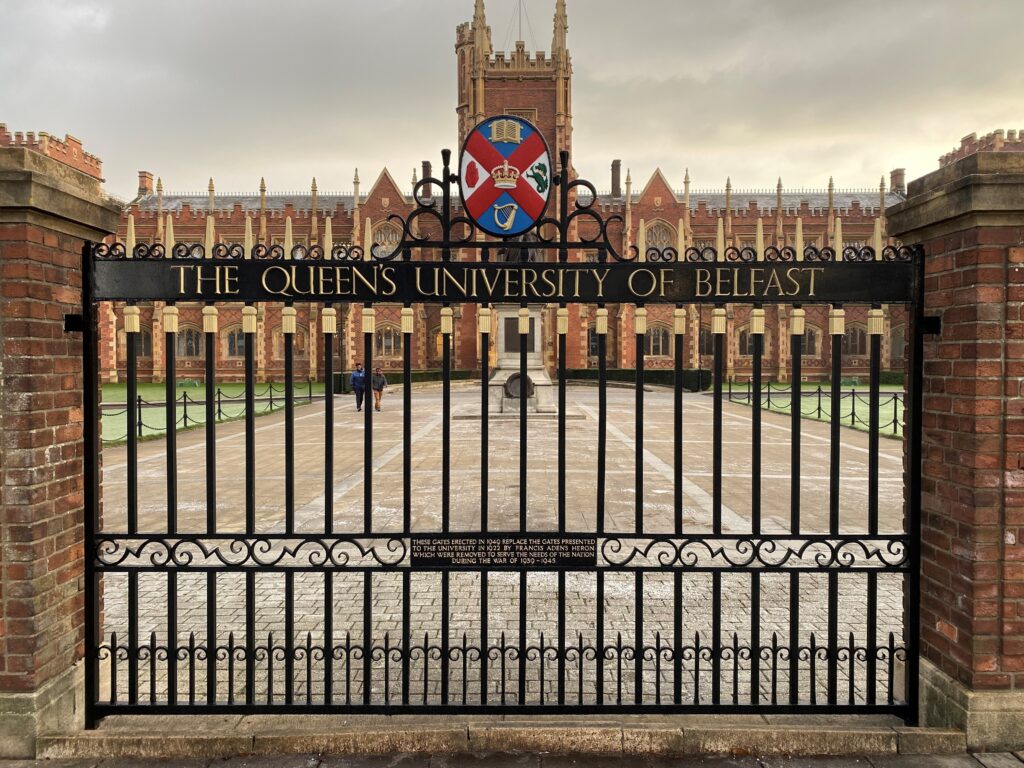
‘Why Should Democracy end at the seminar room door’?: Political Economy Education, Care and Intellectual Promiscuity
What does it take to rethink how we teach economics? John Barry, Professor of Green Political Economy at Queen’s University Belfast, explores what happens when we start by asking students what they want to learn, responding to their needs, and embracing the value of systems […]
Wednesday 7 October 2026