
What does it take to rethink how we teach economics? John Barry, Professor of Green Political Economy at Queen’s University Belfast, explores what happens when we start by asking students what they want to learn, responding to their needs, and embracing the value of systems thinking.
This is part of our five-part blog series, Economics outside the Classroom. We’re showcasing examples of innovative, transformational economics teaching taking place outside of the traditional university department setting. All of these case studies were identified as part of Rethinking Economics UK’s report into 20 UK curricula.
Democratising and Pluralising Political Economy
Since I started teaching in 1994, I have always sought (albeit unevenly) to include student input into how and what they learned, and how they are assessed. For most of my teaching career I have sought to enable students to connect their learning to their interests and concerns and lived experiences, against the backdrop of my honesty about my own ideological political position – an anti-capitalist, eco-Marxist – a self-described ‘Marxist-Lentilist’. I am also upfront about my critique of the university system as currently operating as an ‘agent of unsustainability’ (McGrown and Barry, 2023). Unlike malestream neoclassical/neoliberal economics that pretends to be objective and neutral, but smuggles in its normative, pro-capitalist, pro-market and anti-environmental values via ‘axioms’ and assumptions of its models (that students are never encouraged to critically analyse), at least my students know where I am coming from.
Asking students what they want to learn
The best experience I have to offer is a final year module I have taught since 1996, entitled ‘Earth, Energy, Ethics and Economy: The Political Economy of Unsustainability’. I set half this module, and then invite the class to decide the other remaining seminar topics. They also decide on their essay topics in consultation with me. This might be the only time in their entire lives as students that they have the opportunity to decide what they want to learn.
This way of organising teaching is very time-intensive, and it takes a lot more time to co-create a module with students than to simply deliver an already constructed one. This extra time is not factored into existing work allocation models, meaning that democratising the curriculum is not institutionally supported or feasible for most academics, especially those with caring responsibilities and/or with precarious employment contracts. This is a real pity, since my experience of co-constructing the modules with students has always been, on the whole, extremely positive, both in terms of student engagement and achievement, as well as my own teaching achievements and engagement with the students.
I am absolutely convinced that if we, as academics and other university workers had more control over the university system, and ‘took back control’ by including students in designing and updating modules and programmes, we would co-create better, more meaningful, impactful, inspiring and enjoyable learning and teaching experiences. This could create forms of learning, skills development and technologies that would help us solve, rather than perpetuate, the planetary crisis. We see the promotion or/and acceptance of ‘disruptive innovation’ by government, academic research and businesses in many areas of society and the economy; so why not experiment with such disruptive innovation within the academy? Why limit ourselves to ‘prophylactic innovation’? Whose interests are served by limiting such innovation?
There are also many benefits of unlearning, or what Jennie Stephens calls ‘exnovation’ (2023). This process of unlearning, I have found, is crucial for uncover uncritically held student views about ‘the economy:’ (How much is it worth to my university that the vice chancellor is toilet-trained? Why is the gendered care labour that this involved not included in GDP? Who decided that? Why?), or ‘economic growth’ (What is it? Why do we need it? Can we have good, well paid, unionised jobs, excellent public services etc. without it? how can the human economy, a sub-system of the larger earth systems on which it depends, continually grow when the larger system is not growing?).
Care and Emotional Wellbeing in the Education We Need for the World Our Students Want
What would genuinely student–based learning look like beyond the corporate bullshit of the ‘student experience’? How is it a ‘student’ experience if the ‘student’ is not included in the design, motivation or intention behind the said ‘experience’? Within the university context, I have often thought of the paradox (contradiction?) of teaching about ‘democracy’ inside an institution that itself is thoroughly undemocratic, where students have no democratic voice in deciding what it is they learn!
This concern with personally holding, developing and disseminating (politically and academically) realistic and hopeful futures beyond and through our polycrisis (that will last for decades and will not be easily addressed) led me to change my pedagogic practice some years ago. By nature I am – despite the intellectual heaviness and emotional burden of the knowledge gained from reading the work of others – a happy, happy go lucky, ‘hail fellow well met’, positive, energetic person (as can be seen from my effusive self-description!). I think of myself as an engaging and enthusiastic teacher and speaker. Yet I discovered a few years ago that despite all my energy, my political ‘call to arms’, my honesty in ‘telling the truth’ about the climate, ecological and inequality crisis now and in the coming decades, I was scaring and overwhelming students. In part, this was due to my not sufficiently including them in the decision-making about what it was they were learning. Democratically involving students, teaching topics and understanding the issues they found interesting or important not only helped overcome this sense of being overwhelmed and disempowered, but also ensured what I teach was fresh and up to date.
My focus on providing students with the evidence and arguments that the root cause of these interconnected crises was our ecocidal, growth-oriented capitalist economic system was leaving some of my students even more anxious and powerless to act than before taking my class. Like a lot of academics who work in and on difficult and challenging areas, I had – after many years of reading, writing and talking about the end of the world as we know it, needless human suffering – become inured and emotionally cauterised to the very grim futures I was so energetically and in great detail communicating to my students. For those who might have either some vague and general (and usually optimistically orientated) knowledge of the planetary crisis, or no knowledge at all of how bad things are, taking one of my classes could, and did, result in students becoming more anxious about the and their futures.
Seeing my students going from ignorance to despair and anger and sometimes nihilism was and is not an unusual experience for me as an educator. This was not helped by the fact that I had always emphasised to students taking my modules that what they would learn was not merely of academic interest, but knowledge about the world that was coming into being that they, their children and their grandchildren will inhabit. I stress that, in my judgement, the material covered in my modules is unlike almost any other module they take, affecting and illuminating almost every part of their lives (hence my encouragement of them to bring their ‘whole selves’ to class discussions, to use their experiences of work, family, community, shopping and entertainment habits and so on to confirm, challenge or modify what I communicate to them in lectures, what they read or what I or other students say in class discussions). In response to the realisation that I was making my students more anxious, I have put a trigger warning on my modules.
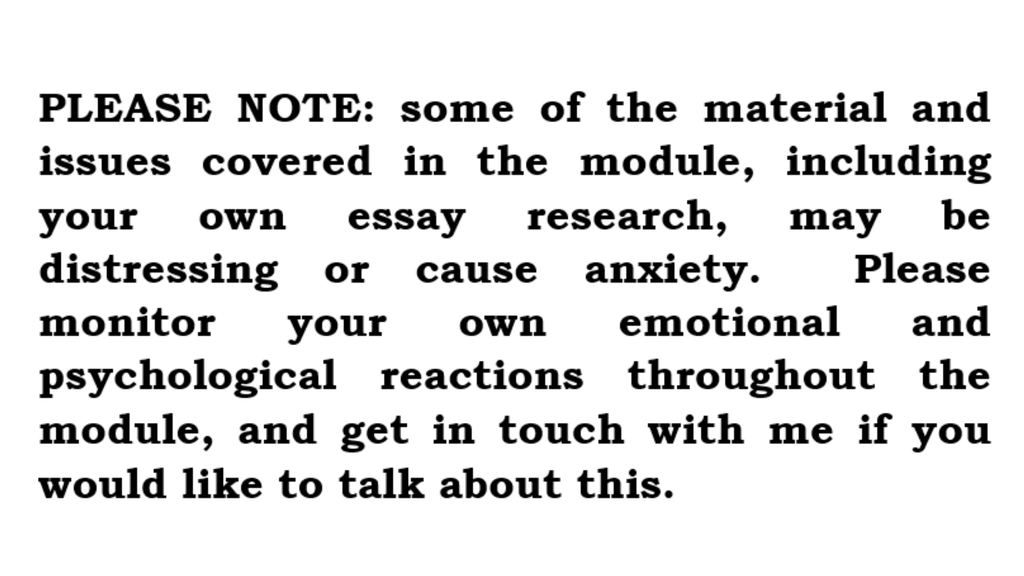
In addition, I have organised additional seminars on the mental health and emotional impacts that may arise from thinking about very possible near-term negative futures. I have also openly engaged with students on both the topics I teach and how I teach them. I think support for students (and training for staff) working on such emotionally and psychologically demanding subject areas should be mandatory. It should also include values, such as normative issues of justice, as well as facts and scientific evidence.
Intellectual Promiscuity and Systems Thinking
If we are learning about a ‘polycrisis’, taking a plural approach to political economy education seems fitting. It implies that interdisciplinarity should be a core rather than optional dimension of any learning components that students are offered. Such ‘intellectual promiscuity’ is something I have long promoted and practiced (Barry 2016), as well as holding that any interdisciplinary learning should include systems and complexity thinking as well as critical and independent thinking. Such interdisciplinarity should not only be about bringing different academic disciplines into conversation with one another. Ideally and where appropriate, this should also include non-academic, imaginative and creative outputs such as poetry, imaginative fiction, films and artistic outputs.
I describe myself as a green political economist and much of the work I do is conceptual, analysing issues like ‘capitalism’, ‘energy transitions’, ‘climate breakdown’, ‘climate justice’, ‘social movements’ etc. while focusing on ‘structural transitions’ and ‘systemic level transformations’. Operating at this level of abstraction to understand wholes and not just individual parts, makes you a systems thinker. Systems thinking can aid in helping one understand and see the causal relationships that can explain why and how we observe or experience what we do, or relations between one system and another, and see that everything is connected.
I have often wondered if the negative view of Marxism or feminism stems from how these forms of knowledge let people understand and ‘see’, perhaps for the first time, the systemic (!) and causal and explanatory connections between class, race, economic relations and politics, policy, the media and culture. It is perhaps the reason why those interests supporting the status quo have real difficulty in finding funding for education, while there is always plenty of funding for war?
Photo credit: Commons Wikimedia

References
Barry, J. (2016b). “In Praise of Intellectual Promiscuity in the Service of a ‘Passion for Sustainability’”, in Byrne, E et al (eds), Transdisciplinary Perspectives on Transitions to Sustainability. (Manchester: Manchester University Press), 234-237.
McGeown, C. and Barry, J. (2023), ‘Agents of (un)sustainability: democratising universities for the planetary crisis’, Frontiers in Sustainability. 4:1166642. doi: 10.3389/frsus.2023.1166642
Contributors
John Barry
The World’s only ‘Professor of Green Political Economy’,Centre for Sustainability, Equality and Climate ActionOllscoil na Banríona, Béal Feirste /Queen’s University Belfast

Share this article
Measuring What Matters: Inclusive and Sustainable Growth Beyond GDP
Participants came from public and private Universities, think-tanks, and research institutions namely Mulungushi University (MU), the Copperbelt University (CBU), Kwame Nkrumah University (NKU), ZCAS University, Information and Communication University (ICU), Cavendish University Zambia (CUZ), the University of Zambia, Kabwe Institute Of Technology (KIT), Amin Centre for Policy Research, and United Nations Zambia Youth.
Wednesday 7 October 2026
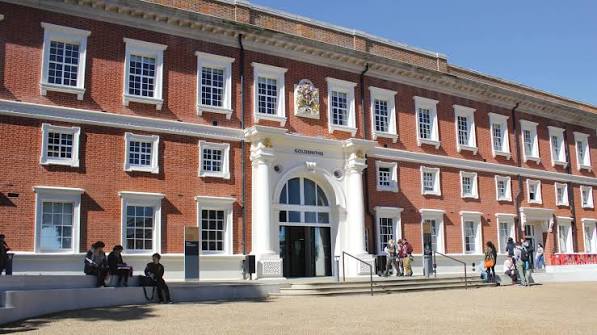
Teaching economics with a gimlet eye: PPE at Goldsmiths
What does it take to rethink how we teach economics? Paul Gunn, convenor of the Economics, Politics and Public Policy BA programme at Goldsmiths, University of London, reflects on how the unrest that followed the financial crash helped inspire a new Politics, Philosophy and Economics […]
Wednesday 7 October 2026
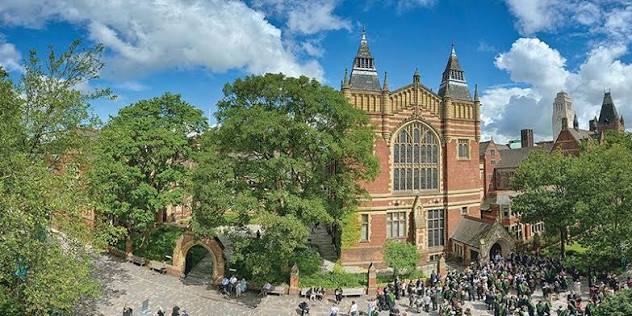
University of Leeds: Rethinking Economics All Over Campus
What does it take to build a new approach to teaching economics? Eric Kemp-Benedict, Associate Professor at the University of Leeds, shares his reflections on the development of the Ecological Economics MSc, his role in shaping and delivering the course, and why collaboration has been […]
Wednesday 7 October 2026