
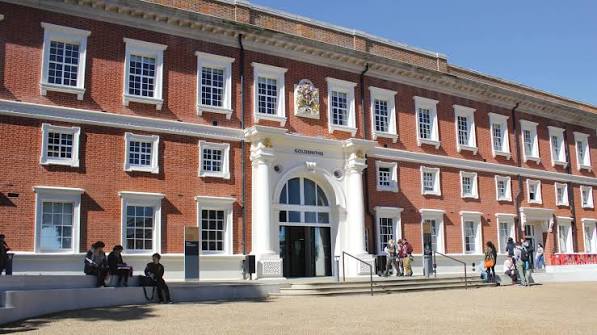
What does it take to rethink how we teach economics? Paul Gunn, convenor of the Economics, Politics and Public Policy BA programme at Goldsmiths, University of London, reflects on how the unrest that followed the financial crash helped inspire a new Politics, Philosophy and Economics degree — one that set out to question what economics is, how it is taught, and what it should look like in the post-crash era.
This is part of our five-part blog series, Economics outside the Classroom. We’re showcasing examples of innovative, transformational economics teaching taking place outside of the traditional university department setting. All of these case studies were identified as part of Rethinking Economics UK’s report into 20 UK curricula.
The Politics, Philosophy and Economics (PPE) programme at Goldsmiths emerged in 2012, following a period of cautious optimism in the social sciences. As Queen Elizabeth’s famous question during a visit to the LSE suggested, the 2008 financial crisis had exposed a gap between mainstream economics and the social and economic realities it purported to explain. Faced with this gap, critics reasoned, economists would surely have to reckon more seriously with questions of power, culture and history. Yet mainstream economic writing and teaching—not to mention the policies that its practitioners broadly supported—remained largely unchanged. Standard neoclassical models continued to dominate the discipline, with the crisis treated principally as an external shock – when it was acknowledged at all.
By 2011, that complacency was being openly contested. The Occupy camps in New York and London, the student walkout from Greg Mankiw’s Harvard class, David Graeber’s Debt, and the formation of the Post-Crash Economics Society at Manchester all reflected what social scientists might call a “bottom-up” demand for economics to become more pluralistic and open to political and methodological challenge. Readers of this blog will know well that Rethinking Economics grew from that demand.
It was in this atmosphere that Goldsmiths’ PPE degree was created. Although inspired by Oxford’s famous programme, our intention was not to imitate it, but to undertake a deliberate, creative and ultimately progressive reworking of the very idea of “P, P and E”. Politics modules would cover postcolonial as well as Western thought. Philosophy modules would draw on critical and continental traditions. Economics would introduce students not only to heterodox and historical approaches but also to insights from sociology, anthropology and cultural studies. Our aim was not merely to place additional perspectives around a conventional economics core. It was to question what counts as “economics” in the first place.
That distinction was important at the programme’s inception, and it remains important today. Mainstream scholars tend to present economics as a technical discipline organised around formal models and assumptions concerning rational behaviour and constrained optimisation. Political and institutional questions often appear only after these basic models have been established, at which point they are liable to be treated as complications or “frictions”. At Goldsmiths, we invert this approach. Markets are treated not as natural expressions of a universal economic rationality, but as historically produced institutions with contested meanings and uneven consequences. This enables us to interrogate the relations of power underpinning money and finance, the ecological politics obscured by the growth imperative, and the ways in which economic “knowledge” itself emerges from the interplay of national histories, professional interests and social hierarchies.
This does not mean that we reject rigour. Rather, we reject the notion that rigour can be achieved only through the mathematisation of social inquiry. Financial crises cannot be understood adequately without considering how institutions of banking, debt and hierarchy shape human behaviour—and the meanings attached to that behaviour—in historically specific ways. Nor can we understand problems such as climate change and inequality without confronting the human purposes, relationships and narratives from which they emerge.
This approach is rooted neither in polemics nor in a misunderstanding of mainstream economics. None of the teaching staff, least of all the economists, rejects mainstream methods wholesale or denies their analytical power. But this power is limited insofar as human behaviour is expressed within political, social and cultural contexts that intrude upon, if not thoroughly distort, rational economic logics. As we see it, thinking seriously about economics means locating it within these contexts and asking both what it can explain and where its limits lie.
For students, this opens up economics as a contested, adaptive and creative field of inquiry. Students have the option to specialise in mainstream methods, but they are encouraged to consider not only the internal coherence and sophistication of economic models, but also their assumptions and blind spots. Mandatory modules in political economy, political theory and global politics similarly encourage them to examine the possibilities and limitations of concepts such as “efficiency”, “growth”, “welfare” and even “justice”. The student-led New School Economics society—particularly vibrant in the years before the Covid-19 pandemic—has shown how powerful this pedagogy can be. Our students do not simply consume theories. They use political economy to interpret their own histories, positions and predicaments.
Our PPE programme, then, offers more than a heterodox curriculum. It represents a different conception of economics education, grounded in pluralism, an awareness of the inescapability of political choice, and sensitivity to the contested meanings and effects of history and culture. Our goal is not to reject or displace economics, but to challenge the artificial boundary between supposedly objective economic knowledge and the beliefs, experiences and political judgements of those who do not possess formal economic expertise.
Since 2008, that boundary has helped to insulate neoclassical models from the complexities of social and political life. Its effect has been not only to inhibit the development of better methods, but also to sustain—if not create—conditions in which conspiracy, suspicion and mutual mistrust can thrive. Overcoming this predicament requires us to recognise that no single discipline, including the self-proclaimed “queen of the social sciences”, has a monopoly on truth. We progress through critical, inclusive and open inquiry, or not at all.
In the wake of the financial crisis, numerous observers followed the Queen in asking why economists had failed to anticipate or adequately explain what had happened. Our answer at Goldsmiths was to redesign the intellectual environment in which economics is taught. That remains unfinished work, and it is as urgent now as it was then.
Contributors
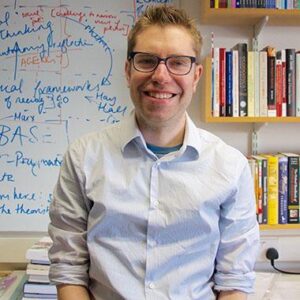
Paul Gunn
Convenor of the Economics, Politics, and Public Policy BA programme at Goldsmiths University (UK).
Share this article
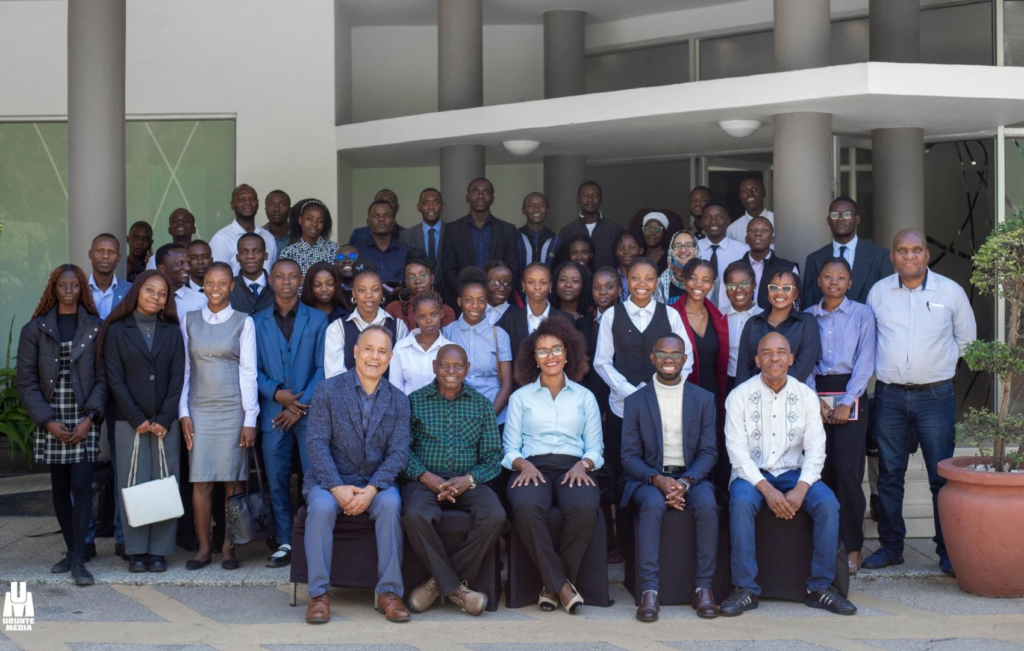
Measuring What Matters: Inclusive and Sustainable Growth Beyond GDP
Participants came from public and private Universities, think-tanks, and research institutions namely Mulungushi University (MU), the Copperbelt University (CBU), Kwame Nkrumah University (NKU), ZCAS University, Information and Communication University (ICU), Cavendish University Zambia (CUZ), the University of Zambia, Kabwe Institute Of Technology (KIT), Amin Centre for Policy Research, and United Nations Zambia Youth.
Wednesday 7 October 2026
‘Why Should Democracy end at the seminar room door’?: Political Economy Education, Care and Intellectual Promiscuity
What does it take to rethink how we teach economics? John Barry, Professor of Green Political Economy at Queen’s University Belfast, explores what happens when we start by asking students what they want to learn, responding to their needs, and embracing the value of systems […]
Wednesday 7 October 2026
University of Leeds: Rethinking Economics All Over Campus
What does it take to build a new approach to teaching economics? Eric Kemp-Benedict, Associate Professor at the University of Leeds, shares his reflections on the development of the Ecological Economics MSc, his role in shaping and delivering the course, and why collaboration has been […]
Wednesday 7 October 2026